Guides
Hands-free dog leads — the complete guide to hands-free dog walking
I clearly remember that first walk with an ordinary lead and a cup of coffee in one hand. The dog pulled left, the coffee landed on my jacket, and my phone slipped out of my pocket. Three things went wrong in less than ten seconds. That was the day I decided to try a hands-free dog lead — and I have never looked back.
A hands-free dog lead frees your hands while you are out with your dog. It sounds simple, but it changes the whole walking experience. Whether you jog, push a pram, or simply want to stop holding a lead in the rain — this is worth a closer look.
What actually is a hands-free dog lead?
In short, a hands-free dog lead attaches to your body rather than being held in your hand. There are several versions, and the differences are quite substantial.
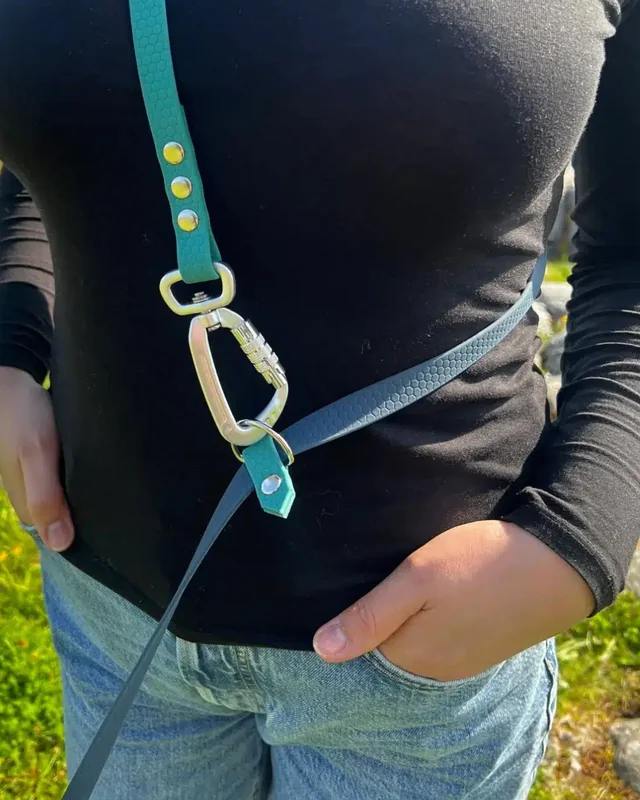
A waist belt with a lead is the most common type. You buckle a padded belt around your waist, and attach the lead with a snap hook. Some leads have an elastic section to soften sudden pulls. Others have a fixed length. This type works well for jogging with your dog and everyday walks.
The over-the-shoulder version is more like a long lead worn diagonally across your upper body. The weight is distributed across the shoulder and hip. I find it sits better on longer hikes, but it can slip a little if the dog suddenly pulls sideways.
A multifunctional hands-free lead is the most flexible solution. It is a long lead with several rings and snap hooks, which you can use as an ordinary lead, a double lead for two dogs, or hands-free by fastening it around your waist. A little like a Swiss Army knife for dog walking.
Who is a hands-free dog lead suitable for?
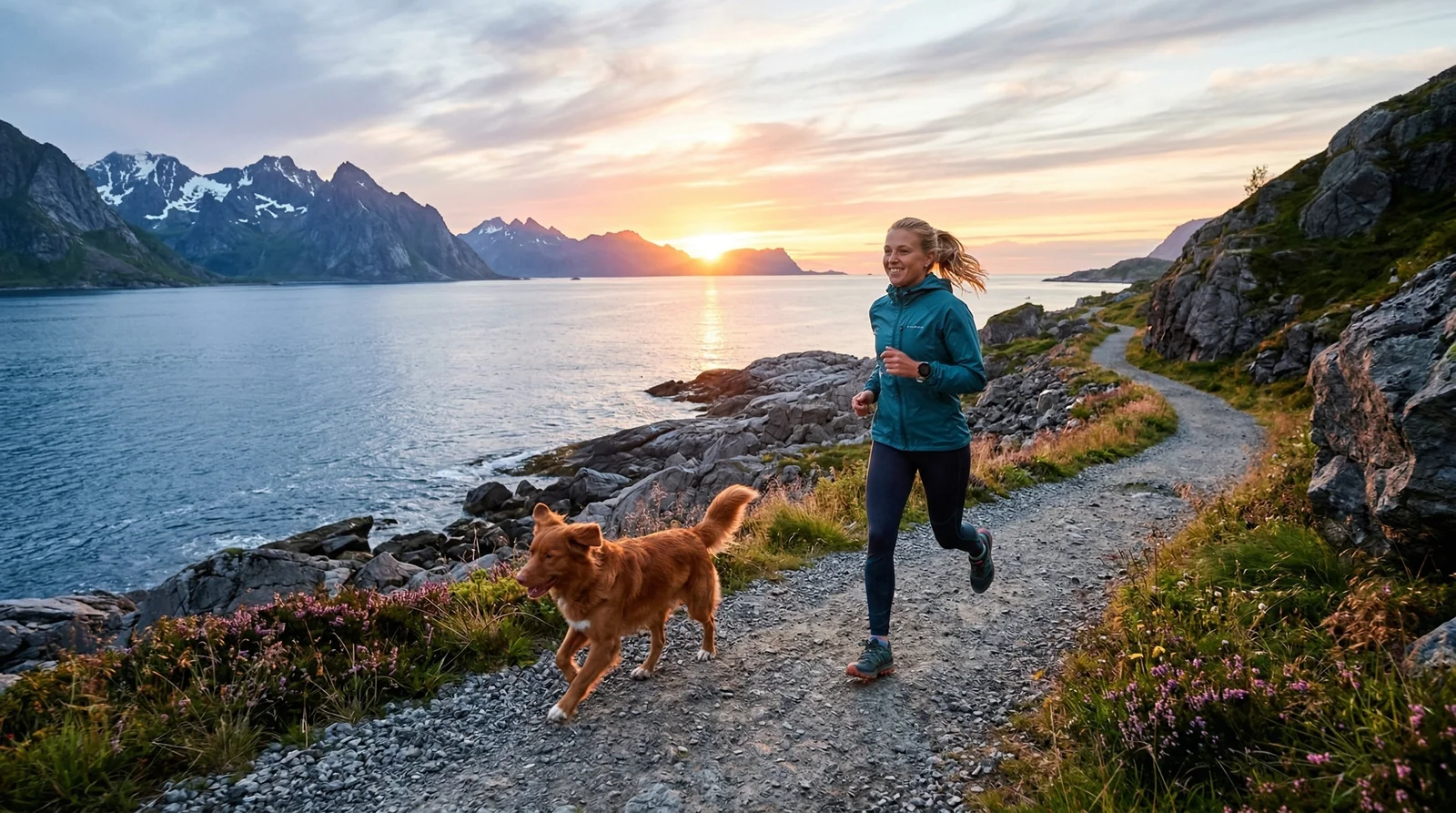
Joggers and runners. If you enjoy running with your dog, a dog running lead is almost indispensable. With your hands free, you get a natural arm swing, better balance and a much more comfortable run. I noticed the difference on the very first outing — it felt like running alone, just with company.
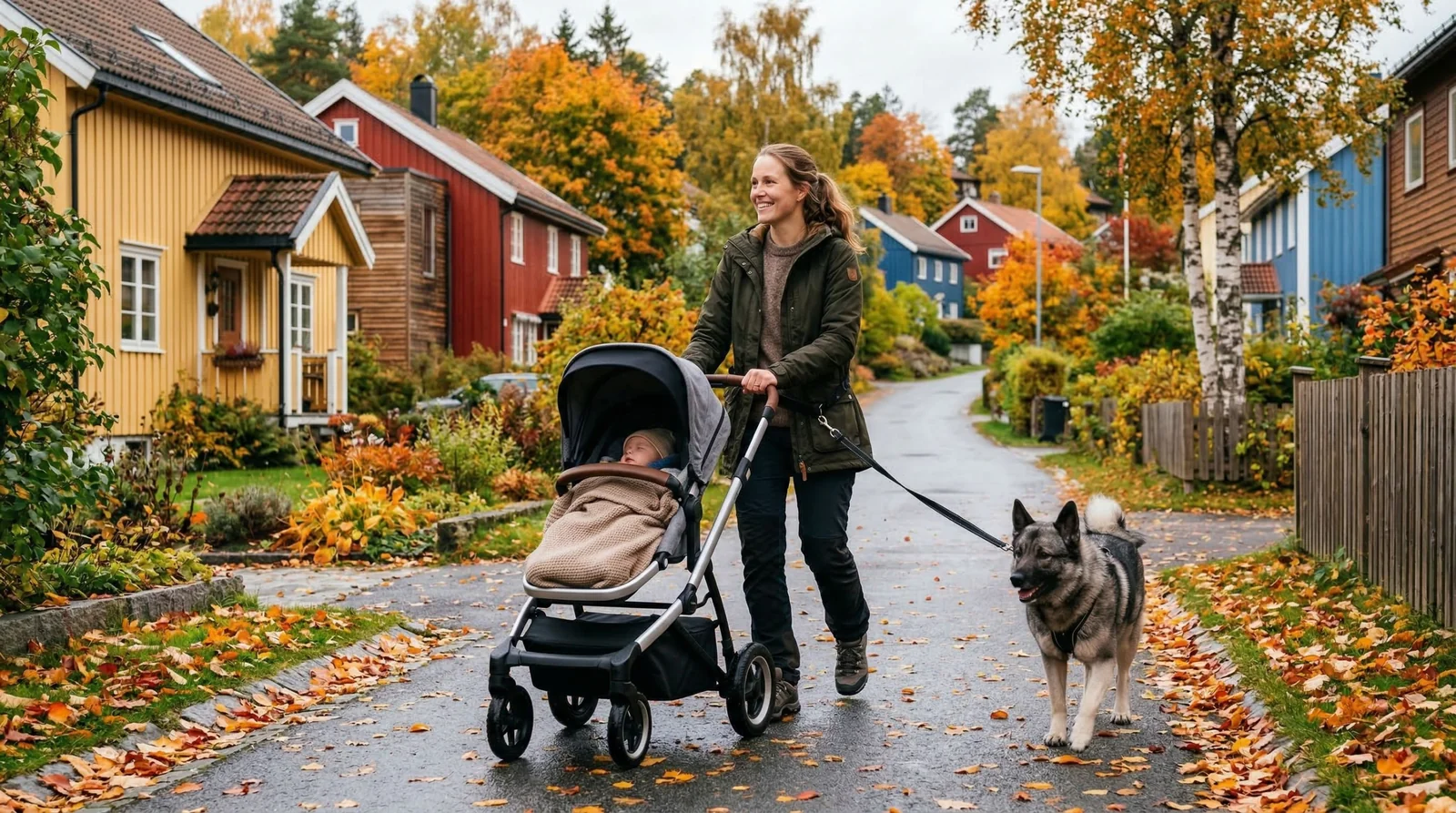
Parents with a pram. Two hands for the pram, no lead to manage. Simple maths. Especially in winter, when the ground is slippery and you need both hands to steer.
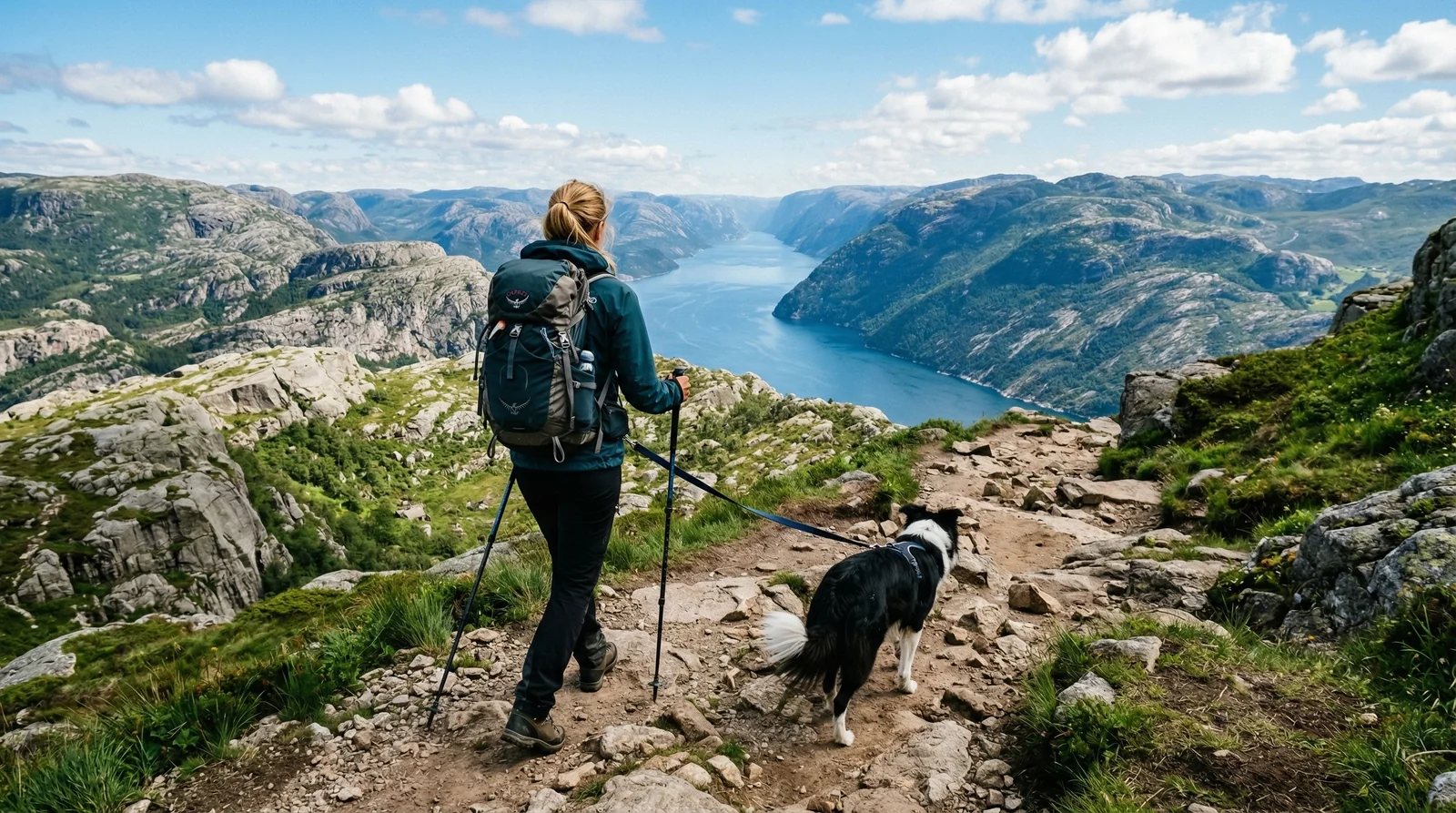
Outdoor enthusiasts. On mountain hikes or woodland walks, it is wonderful to have your hands free for walking poles, a map, or simply climbing over rocks without getting tangled in the lead.
Photographers and people using their phones. Yes, we all take pictures of our dogs. With a dog walking belt, you avoid the acrobatics of holding the lead in one hand and your phone in the other. For once, you actually get sharp photos.
What should you look for when choosing a hands-free dog lead?
A few things separate a good hands-free dog lead from a poor one. Here is what I would prioritise:
Material. Waterproof webbing handles Norwegian weather by far the best — nylon absorbs water and starts to smell after a season. Look for a lead with some thickness — very thin versions wear quickly and can cut into the skin if the dog jerks. Reflective details are a big plus for winter walks in the dark.
Belt width. A narrow belt distributes weight poorly and digs into your hips. Choose a belt at least 5-7 cm wide. Your back will thank you.
Lead length. For jogging, 1.2 to 1.8 metres works well. Shorter gives more control. Longer gives your dog more space, but makes it a little harder to keep track. Adjustable is always best.
Attachment points and snap hooks. Check that the snap hooks are metal, not plastic. Plastic cracks in the cold. An extra ring on the belt for keys or dog waste bags is useful.
Padding. The belt should be padded where it rests against your body. Without padding, you feel every single jerk directly in your hip. That is not something you want after a half-hour walk with an enthusiastic dog.
Elastic or shock absorption. Many hands-free dog leads have an elastic section. It absorbs sudden pulls and makes the walk smoother for both of you. In my experience, this is the single most important factor for comfort.
Our waterproof bestsellers — made for Norwegian weather

Dog leads
Hands-Free Dog Lead
from NOK 399.00
Hands-free dog lead in waterproof material, worn around the waist or over the shoulder. Available in 10 mm, 16 mm and 25 mm widths. Ideal as a running belt for jogging, hiking…
View product and customise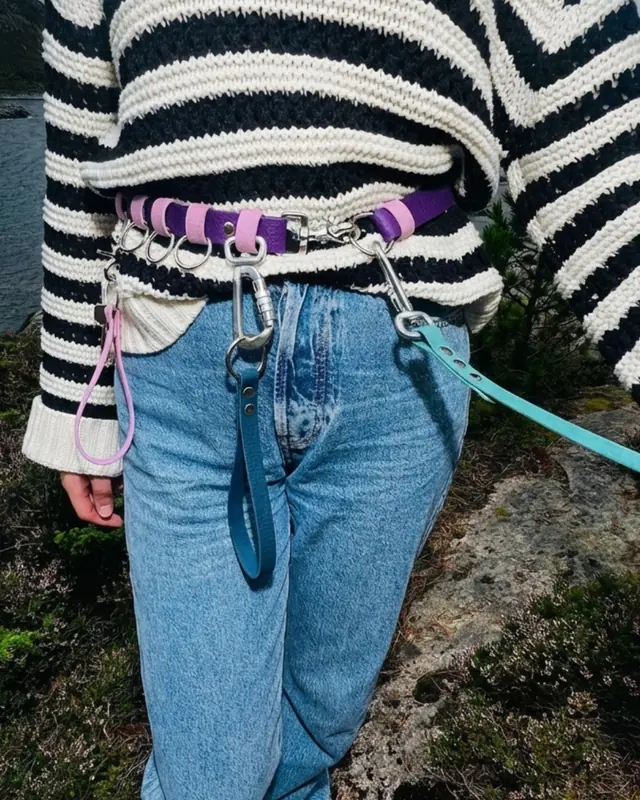

Belts
Adjustable Multifunctional Belt
from NOK 449.00
Adjustable dog walking belt in 16 mm or 25 mm waterproof webbing, designed for hands-free walks and dog sports. Fits sizes S to XL. Attach the lead to the belt and keep…
View product and customise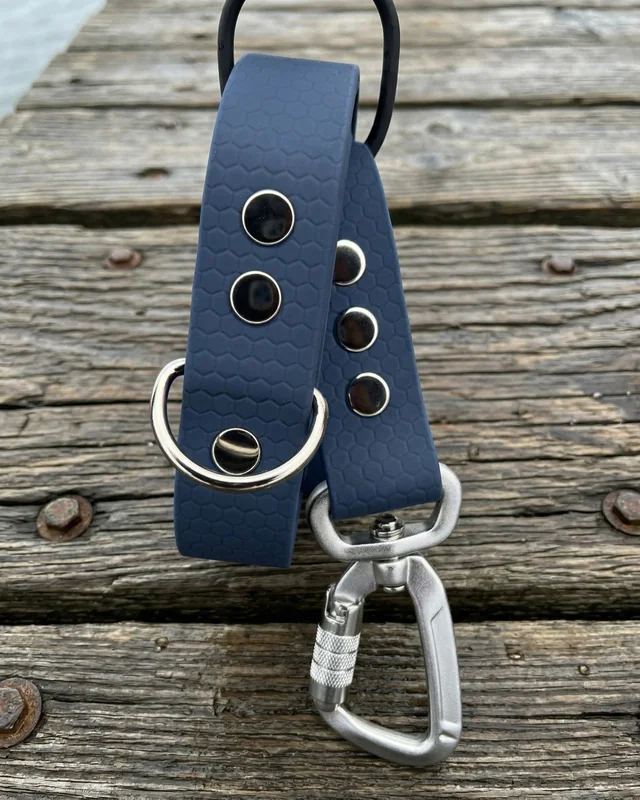

Dog leads
Classic Dog Lead
from NOK 329.00
Handmade dog lead in waterproof material with a honeycomb pattern for grip. Choose between three widths and lengths from 1.2 to 5 metres. Handles all kinds of weather, mud and…
View product and customiseCan all dogs use a hands-free lead?
Short answer: no. Slightly longer answer: it depends.
Large, powerful pullers. Do you have a Malamute or a Husky that thinks every walk is a sled-dog race? Then a dog walking belt around your waist can become downright uncomfortable. The force of a 40-kilo dog deciding to sprint after a squirrel — you certainly feel it. Consider a belt with extra-wide padding and good shock absorption, or use the over-the-shoulder version to distribute the force better.
Puppies. Puppies are unpredictable. They stop suddenly, turn around, and get tangled in everything. I recommend waiting until your dog has some basic lead training before switching to hands-free. At around 8-10 months, most have enough control for it to work.
Reactive dogs. If your dog reacts strongly to other dogs or people, you need quick control. A hands-free lead gives you a little less reaction time than an ordinary lead in your hand. That does not mean it is impossible — many multifunctional versions have a handle near the hook so you can intervene quickly. But be honest with yourself about your dog's current ability.
Tips for using a hands-free dog lead safely
Safety first. A hands-free dog lead is a tool, and like all tools, it needs to be used correctly.
Never attach a hands-free lead to a collar. Always use a harness. If your dog jerks and the force goes straight into the collar, you risk injury to the throat. A Y-harness or H-harness distributes the force across the chest. This is not optional — it is a ground rule.
Start at home. Or at least somewhere quiet. Your first time with a hands-free lead should not be beside a busy road. Let both of you get used to the feeling. Your dog needs to learn that it is connected to your waist, and you need to learn how it feels when your dog pulls in a different direction from the way you are walking.
Have a plan for emergencies. Check that you can release the belt quickly if something happens. Most good belts have a quick release — a buckle you can open in one movement. Test it before you need it.
Pay attention to the terrain. Hands-free dog walking on tarmac is safe and predictable. In woodland, where roots and stones can trip you, take extra care. If your dog pulls you off balance there, you fall harder than on flat ground.
Avoid cycling. I know it is tempting, but a hands-free lead and a bicycle are a poor combination. Your dog can pull you off balance, and you have no way to react quickly enough. Dedicated bike attachments are available for that.
Our recommendations from ÅlesHund
We have tested quite a few hands-free arrangements, and two products stand out:
The ÅlesHund Hands-Free Lead is a multifunctional lead with six ways to use it. You can use it as an ordinary lead, hands-free around your waist, over your shoulder, as a double lead for two dogs, or as a short control lead. It is made from heavy-duty waterproof webbing with reflective details and has metal snap hooks that withstand Norwegian winters. The length adjusts from 1.3 to 2 metres.
The ÅlesHund Multifunctional Belt is designed specifically for hands-free dog walking. The belt is 10 cm wide with neoprene padding and a quick-release buckle, and the broad design distributes the pull evenly around your hips. It also has pockets for your phone, bags and treats. Fits waist measurements from 65 to 120 cm.
Together, these two provide a complete hands-free arrangement that works for everything from quiet evening walks to jogging with your dog on woodland trails.
Summary
A hands-free dog lead is one of the simplest upgrades you can make to walks with your dog. Free hands mean better balance, more comfort, and the ability to actually do things along the way — whether that is jogging, pushing a pram, or simply drinking your coffee in peace.
Choose the right type for your use. Make sure the belt is wide enough and well padded. Always use a harness on your dog, never a collar. And start gently — give yourself and your dog time to get used to the new arrangement.
Dogs do not care what sort of lead you use. But your body does. After a couple of walks with your hands free, you will wonder why you did not switch long ago.