Guides
Norway's compulsory lead period 2026: rules, dates and tips for dog owners
Contents
- What is Norway's compulsory lead requirement, and why do we have it?
- When does the lead requirement apply in 2026?
- When does the compulsory lead period end?
- Municipal rules: leads required all year?
- What does section 6 of the Dog Act say?
- Fines and consequences
- Exceptions to the lead requirement
- Which type of dog lead is best?
- Practical tips for the compulsory lead period
- FAQ: common questions about the lead requirement
The essentials in 30 seconds
Norway's general compulsory lead requirement, known as båndtvang, applies from 1 April up to and including 20 August every year. From 21 August, dogs can generally be off the lead in uncultivated countryside again, but many municipalities have their own, stricter rules. During this period, your dog must be kept on a lead throughout uncultivated countryside. Many municipalities extend the lead requirement, and some require leads all year in parks and outdoor recreation areas. Breaches can result in fines from NOK 3 000 to more than NOK 5 000. Get a reliable dog lead well in advance.
What is the compulsory lead requirement, and why do we have it?
Båndtvang simply means that your dog must be on a lead. Full stop.
It is not about punishing dog owners. It is about protecting animals and nature during a vulnerable period. In spring and early summer, wild animals have their young. Roe deer, hares, birds. All are particularly vulnerable. A loose dog can cause great harm, even if it is “only playing”.
The rule is simple: your dog must be on a lead or under control that provides equivalent security. In practice, that means a dog lead. Not voice commands, not “he always comes back”. A lead.
The lead requirement in Norway is regulated by the Dog Act (Act relating to the keeping of dogs), particularly section 6 on securing dogs during compulsory lead periods.
When does the lead requirement apply in 2026?
The general lead requirement applies from 1 April up to and including 20 August every year. It is the same throughout Norway and is set out in section 6 of the Dog Act.
Are leads compulsory now? Between 1 April and 20 August, the answer is always yes. Your dog must be on a lead in uncultivated countryside, however obedient it is. During the rest of the year, it depends on the municipality you are in.
Notice the wording “up to and including”. 20 August is the final day with the lead requirement, not the first day without it. Many people let their dogs loose on the morning of the 20th — that is one day too early.
When does the compulsory lead period end?
From 21 August onwards, dogs can generally be off the lead in uncultivated countryside again. You should check three things before unclipping:
- The municipality. Many municipalities extend the lead requirement in grazing areas, often until 1 October or later. Sheep in the mountains mean a lead, whatever the date.
- Hunting. Some forms of hunting begin as early as August, and there are hunters and tracking dogs in the woods through autumn. Keep extra control in hunting areas.
- Recall. After four and a half months on the lead, it is often rusty. Do not trust it blindly in the first week.
The simplest halfway solution is a 5–10 metre long line: your dog gets freedom to move, while you still have a safety net. Perfect for refreshing recall in the first weeks after 20 August.
Municipal rules: leads required all year?
This is where most people get it wrong. The Dog Act sets the minimum; municipalities can impose stricter rules.
Oslo has year-round lead requirements in many parks and open spaces. Bergen and Trondheim have similar rules in walking areas close to the city. In municipalities with substantial grazing land, an extended lead requirement until 1 October is more the rule than the exception.
You can find the rules in the municipality's local regulations. Search for “båndtvang” plus the municipality's name, or check its website. And remember: the rules that apply are those where you walk, not where you live.
What does section 6 of the Dog Act say?
The section is brief: from 1 April up to and including 20 August, dogs must be kept on a lead, or securely fenced in or confined, so that they cannot chase or injure cattle, sheep, goats, poultry, reindeer, horses or wildlife.
The same Act gives municipalities the right to issue their own regulations extending the lead requirement. That is the legal basis for all the local rules. The full text of the Act is available on Lovdata.
Fines and consequences
Breaching the lead requirement can result in a fine from around NOK 3 000 upwards, depending on how serious the case is. If your dog injures grazing animals or wildlife, liability for compensation applies as well. In the most serious cases, an order may be made to have the dog put down.
It rarely goes that far. But the fines are real, and a sheep farmer who loses lambs has both the law and public sympathy on their side.
Exceptions to the lead requirement
Some dogs are exempt while actively working or in service:
- Dogs in police, customs, military and rescue service
- Herding dogs working with livestock
- Hunting dogs during lawful hunting and training
Signposted, fenced dog parks are also exempt. For an ordinary family dog on a walk, however, there are no exceptions. Not even for exceptionally obedient dogs.
Which type of dog lead is best?
Four and a half months of daily lead walks place demands on your equipment. The lead needs to withstand rain, mud and a dog that lunges when it smells a roe deer.
As a rule of thumb: 1.5–2 metres for daily and urban walks, 3–5 metres in woodland and countryside, and a 5–10 metre training line when your dog needs room to sniff without being loose. Choose waterproof material. A lead that absorbs water becomes heavy, stiff and smelly within a season.
Our waterproof dog leads — perfect for the compulsory lead period

Dog leads
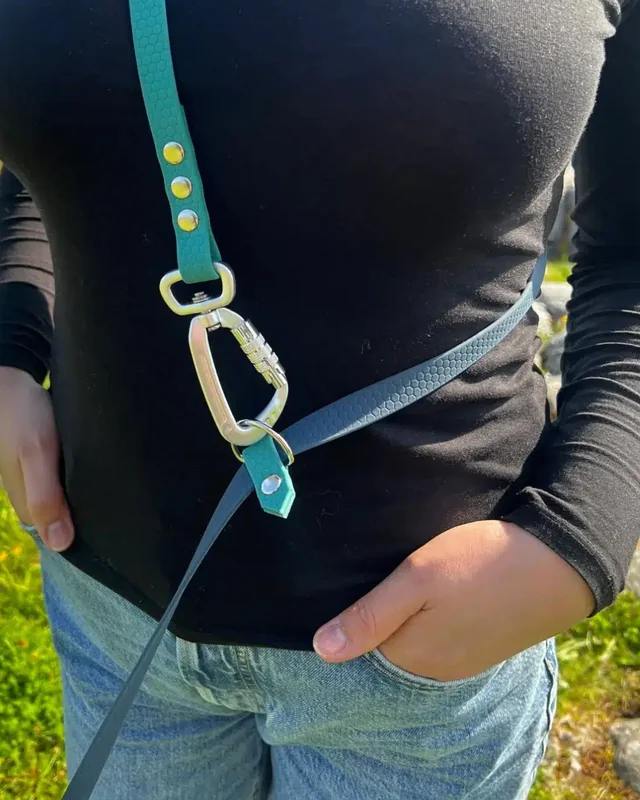
Hands-Free Dog Lead
from NOK 399.00
Hands-free dog lead in waterproof material, worn around the waist or over the shoulder. Available in 10 mm, 16 mm and 25 mm widths. Ideal as a running belt for jogging, hiking…
View product and customise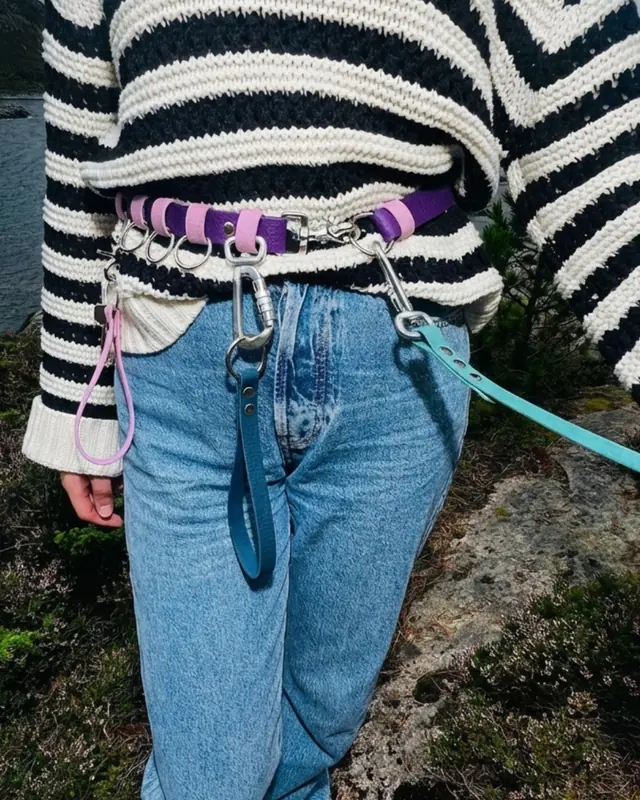

Belts
Adjustable Multifunctional Belt
from NOK 449.00
Adjustable dog walking belt in 16 mm or 25 mm waterproof webbing, designed for hands-free walks and dog sports. Fits sizes S to XL. Attach the lead to the belt and keep…
View product and customise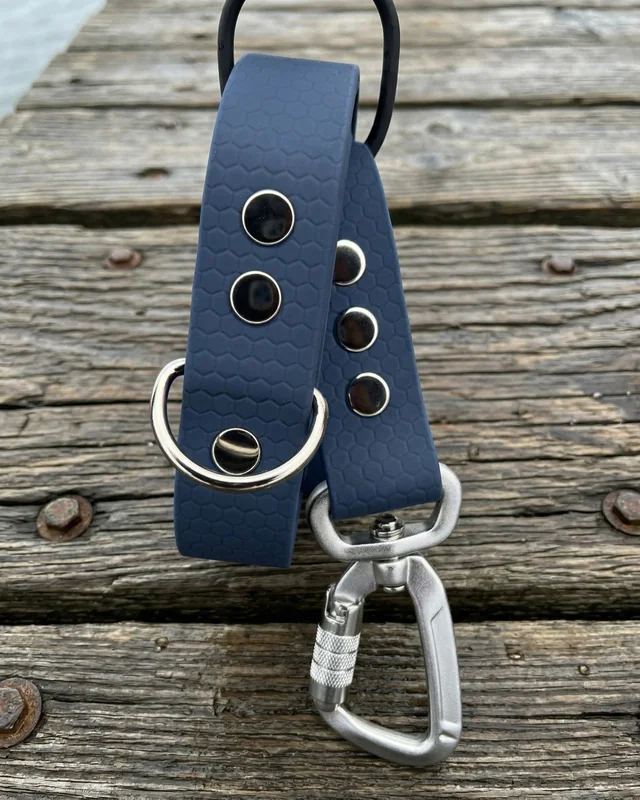

Dog leads
Classic Dog Lead
from NOK 329.00
Handmade dog lead in waterproof material with a honeycomb pattern for grip. Choose between three widths and lengths from 1.2 to 5 metres. Handles all kinds of weather, mud and…
View product and customise8 practical tips for the compulsory lead period
1. Start training early
Does your dog have poor lead manners? Start training before 1 April. It is much easier to work on walking on a lead without the added stress of a legal requirement. Use the final weeks of March to practise loose-lead walking, changes of direction and ignoring distractions. Ten minutes a day makes a big difference.
2. Always carry a spare lead
Things break. Snap hooks can fail. Always keep a spare lead in your rucksack or car. It costs little and could save you a fine, or worse.
3. Check the municipality's rules
We repeat this because it matters. Municipal regulations vary widely. Are you visiting a different municipality from the one you live in? Check the rules first.
4. Use visible reflective details
Spring means long evenings with poor visibility. Make sure both you and your dog can be seen. Many dog leads have reflective elements, which are an advantage at dusk.
5. Respect others
Some people are afraid of dogs. Some dogs are reactive. Keeping your dog on a lead shows consideration for everyone sharing the outdoors with you.
6. Choose the right equipment
A cheap dog lead from a discount shop may work for a Chihuahua, but might not hold a Labrador that spots a squirrel. Invest in equipment you trust.
7. Teach your dog to walk nicely on a lead
It sounds obvious, but many dogs pull like a locomotive. That is tiring for you and stressful for the dog. Work on loose-lead training, rewarding your dog when the lead hangs slack. Treat in your hand, stop when the dog pulls, move on when the lead slackens. Repeat. It takes patience, but works with most dogs.
8. Stay up to date
The rules can change. Municipalities can introduce new extended lead requirements. Follow local news and municipal announcements.
FAQ: common questions about the lead requirement
When does the compulsory lead period begin and end in 2026?
The general lead requirement applies from 1 April up to and including 20 August 2026. This is the same throughout Norway. From 21 August, dogs can generally be loose in uncultivated countryside again. Municipal extensions can create longer periods, so check what applies in your municipality.
When does the compulsory lead period end?
The final day of the general lead requirement is 20 August. From 21 August onwards, your dog can be loose in uncultivated countryside, provided the municipality has not extended the requirement and you have control of your dog. In grazing areas, leads are often required until 1 October.
Are leads required all year in some places?
Yes. Several municipalities have year-round lead requirements in selected areas. Oslo requires leads all year in many parks. Bergen and Trondheim have similar rules in their outdoor recreation areas close to the city.
How long must the lead be?
The Dog Act does not specify a particular length. The lead must give you control of your dog. For urban walks, 1.5 to 2 metres is common. A 5 to 10 metre training line gives more freedom in nature, but you must still be in control.
Does the lead requirement also apply to cultivated land?
The lead requirement in section 6 of the Dog Act applies primarily to uncultivated countryside. However, you must have control of your dog at all times, including on cultivated land. Municipal regulations may have separate rules for parks and green spaces.
What about dog parks?
Fenced dog parks signposted as allowing dogs off the lead are exempt from the lead requirement. But check the signs, because some dog parks have their own rules during particular periods.
Can my puppy be off the lead?
No. The lead requirement applies to all dogs, regardless of age, breed or size. Puppies must also be kept on a lead during the compulsory lead period.
What if my dog is well trained?
Legally, it makes no difference. The law does not distinguish between trained and untrained dogs. The lead requirement applies regardless. Even a dog that is “always obedient” can have an instinctive reaction and chase a roe deer.
Can I use a retractable lead?
Technically yes, but it is debated. A retractable lead gives your dog a wide range and can make genuine control difficult. Many dog experts recommend a fixed lead or training line instead of a retractable lead.
What should I do if I see a loose dog during the compulsory lead period?
Keep your own dog calm and on a lead. If the loose dog seems aggressive or is chasing wildlife, contact the police or the municipality's duty telephone service. If it seems lost, check whether it has an ID tag and contact the owner or the Norwegian Food Safety Authority (Mattilsynet). If possible, take a photo of the dog and note where you saw it, to make finding the owner easier.
Are the rules different for small and large dogs?
No. The Dog Act makes no distinction based on size. A Chihuahua has exactly the same lead requirements as a German Shepherd. Many people think small dogs are “harmless” and therefore exempt, but that is not correct. A small dog can stress wildlife just as much as a large one.
Summary
The lead requirement in Norway applies from 1 April up to and including 20 August, but many municipalities extend it well beyond this. The rules are set out in section 6 of the Dog Act, and breaches can be costly.
What you should do: get a dog lead you trust, teach your dog to walk nicely on a lead, and check the rules in your municipality. The lead requirement is not something to be irritated by. It is a chance to show that you are a responsible dog owner.
Need a dog lead for the compulsory lead period? Explore our range or get in touch. We make everything by hand in Ålesund and ship throughout Norway.
Last updated: July 2026. The information in this article is based on the Dog Act (Act relating to the keeping of dogs of 4 July 2003, no. 74) and applicable municipal regulations. For legal advice, contact a solicitor.