Updated April 2026 · Reading time: approx. 9 minutes
I started running with my dog because I read an article saying dogs that run regularly have healthier joints in old age. That was a lie — or at least greatly exaggerated. But the results were good anyway: he became calmer at home, we grew closer as a team, and I gained a training partner who never let me sleep in.
What spoiled the first few months was the equipment. I used an ordinary lead held in my hand. It sounds trivial, but try running 8 kilometres while holding a taut line attached to a dog that suddenly stops to sniff an ice pack — and you quickly understand the problem. Your elbows, back and rhythm all suffer. After two months, I developed trigger finger in my right hand.
The solution was simple: a dog running belt. It fastened around my hips, taking the jolts and pulls through my core rather than my arm, and suddenly the run became what it was supposed to be. Not a struggle. Just movement.
This guide tells you everything you need to know about dog running belts — what they are, what to look for and which mistakes are easy to make.
What is a dog running belt?
A dog running belt is a belt you fasten around your waist, with one or more attachment points for your dog's lead. Unlike an ordinary lead that you hold in your hand, a running belt leaves your hands completely free. The lead is usually shorter than a standard dog lead — between 1.2 and 2 metres — and many versions have an integrated elastic section, or bungee, to soften sudden pulls.
The principle is that the load moves from your hand and arm to your hips and core muscles, which are much better equipped to handle it. Your hips are your body's centre of gravity. A jolt here affects you much less than a jolt to your wrist.
A dog running belt is not the same as an ordinary sports belt or bum bag. It is designed specifically for the purpose: the attachment points are made to withstand high loads, and the better versions use materials that stand up to sweat, water and Norwegian weather.
Belt with an integrated bungee line — the belt and lead are one unit. A simple solution, but you cannot replace the lead if it wears out.
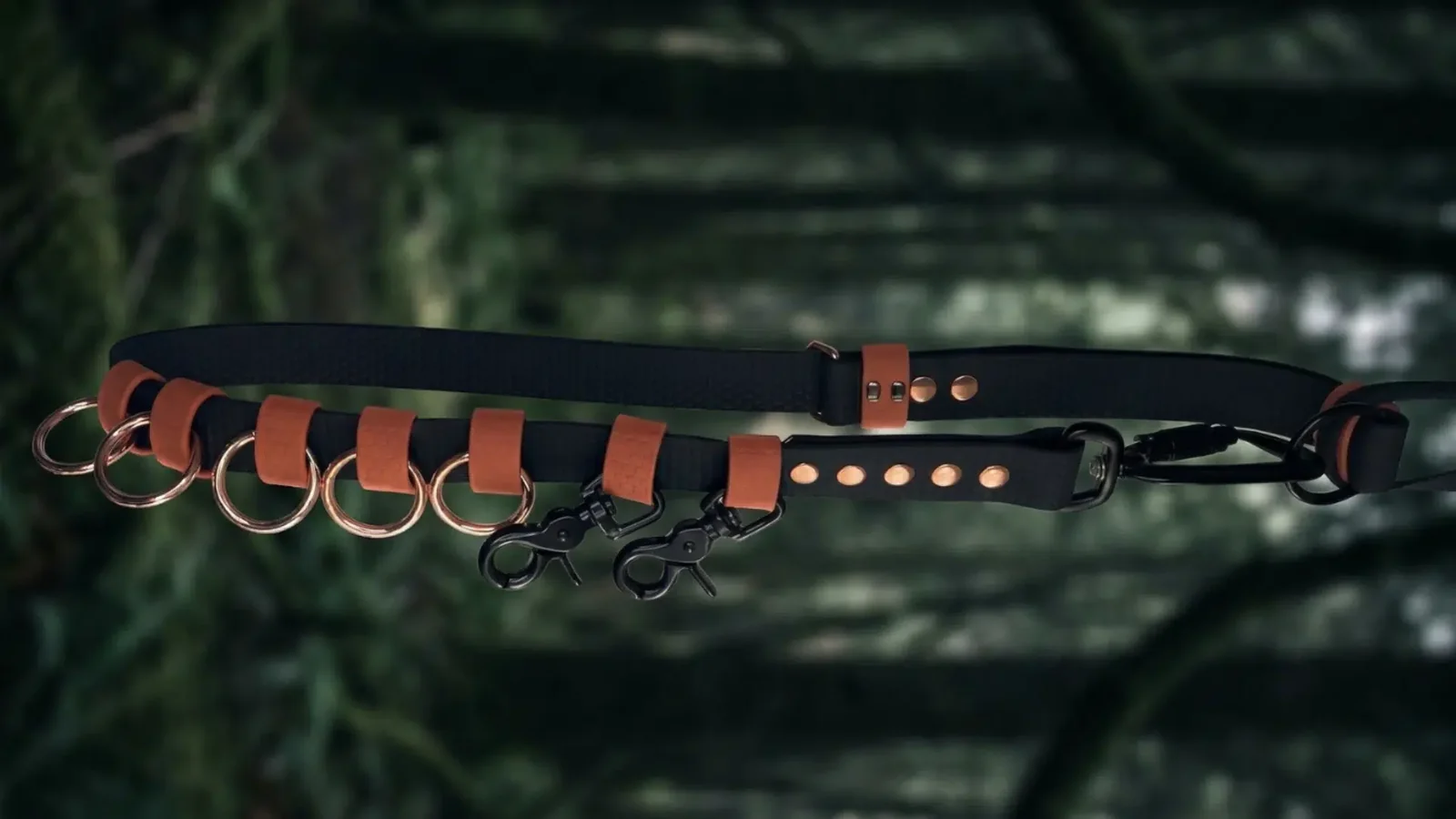
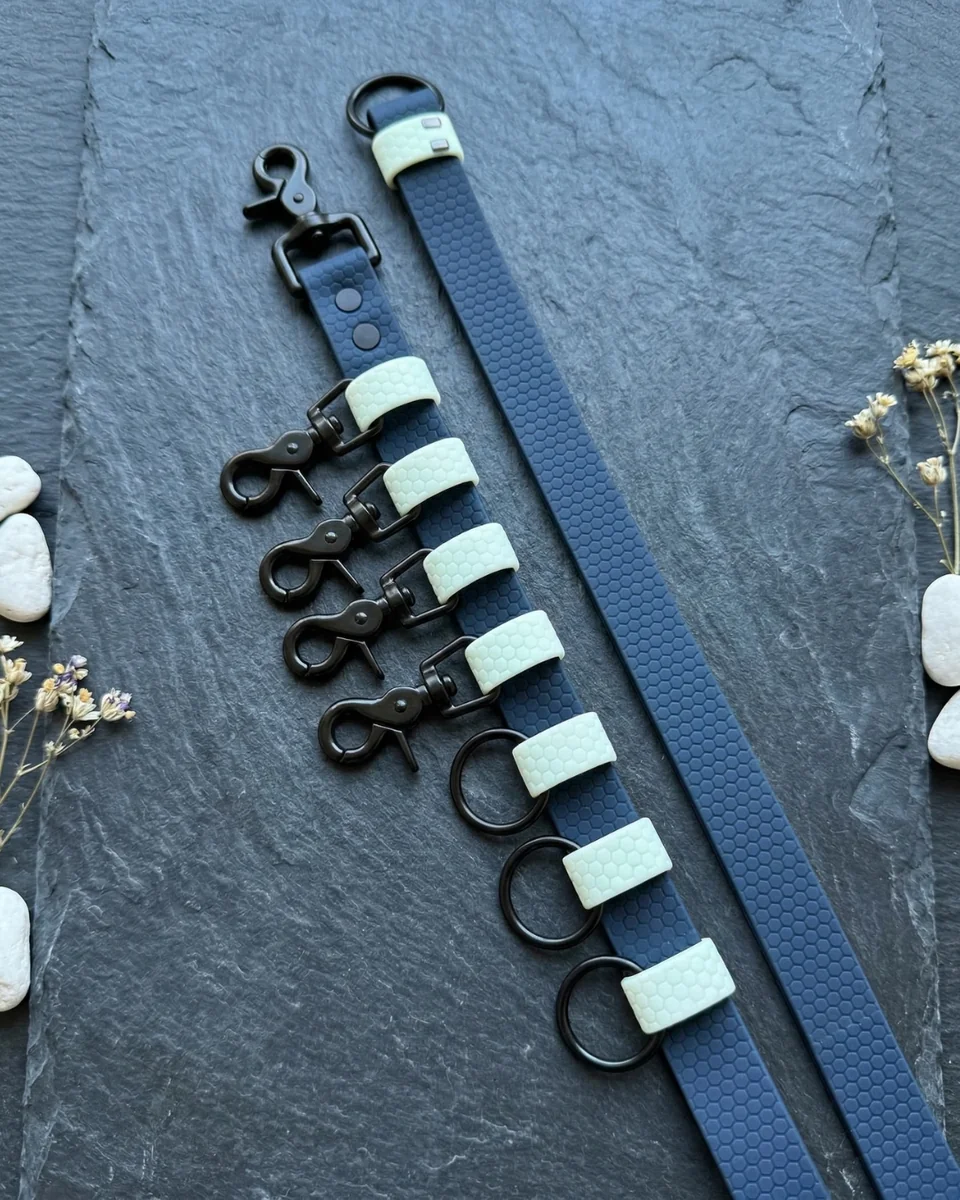
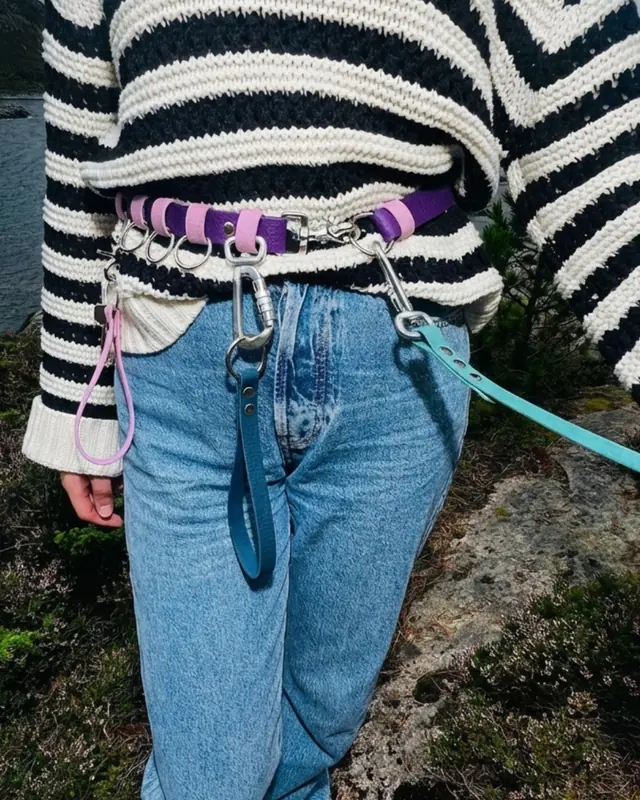
Belt with a snap-hook attachment — the belt has one or two D-rings with snap hooks, and you can attach any dog lead you like. More flexible. Better if you already have a good lead that you are happy with.
Why use a running belt rather than an ordinary dog lead?
It is tempting to think it is just a “gadget”. It is not.
Your arms are not designed for this. When you run, you hold your arms at a 90-degree angle; they swing in rhythm with your body and help propel you forwards. Holding a rigid lead disrupts that whole mechanism. After a few kilometres, you feel it in your shoulder blade. After a few months, it can become a chronic problem.
Dogs pull, and that is normal. Even a well-trained dog will give you an occasional jolt. A bird, a squirrel, a puddle that smells particularly interesting. With an ordinary lead in your hand, you take the full impact. With a running belt, the force is spread evenly across the hip belt.
You run better. Studies of endurance exercise have, in fact, documented that free arm movement contributes to better running economy. Your hands are not especially useful for holding things while you run. They should swing, not grip.
Your dog is safer. Many people attach the lead in the wrong place — directly to the collar. A jolt to the neck can injure the neck vertebrae. A running belt combined with a chest attachment on your dog is the safest solution for both of you.
What should you look for in a running belt?
Quality varies considerably, and the price does not always reflect it.
Material
Nylon is the cheapest and most widespread material. The problem is that it absorbs moisture, starts to smell after a while and becomes increasingly stiff in the cold. After a Norwegian autumn and winter, a nylon belt is usually finished.
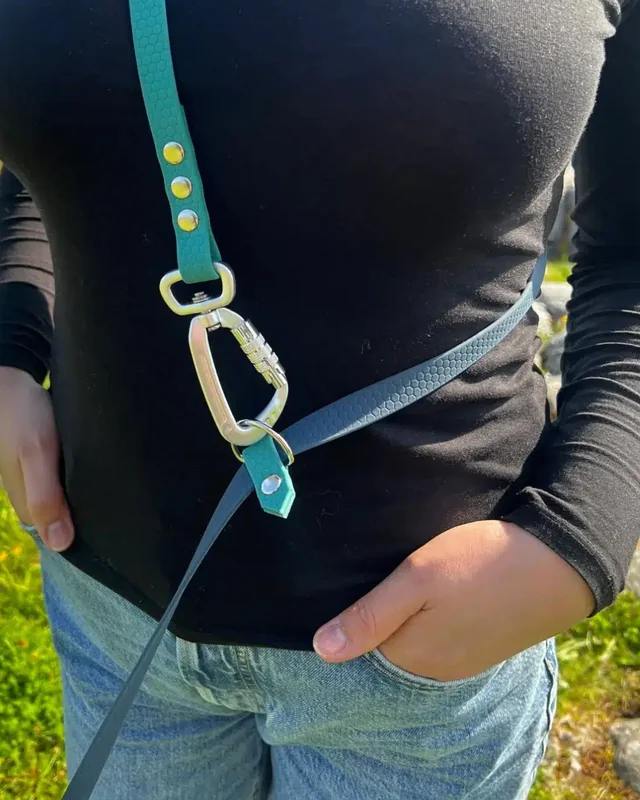
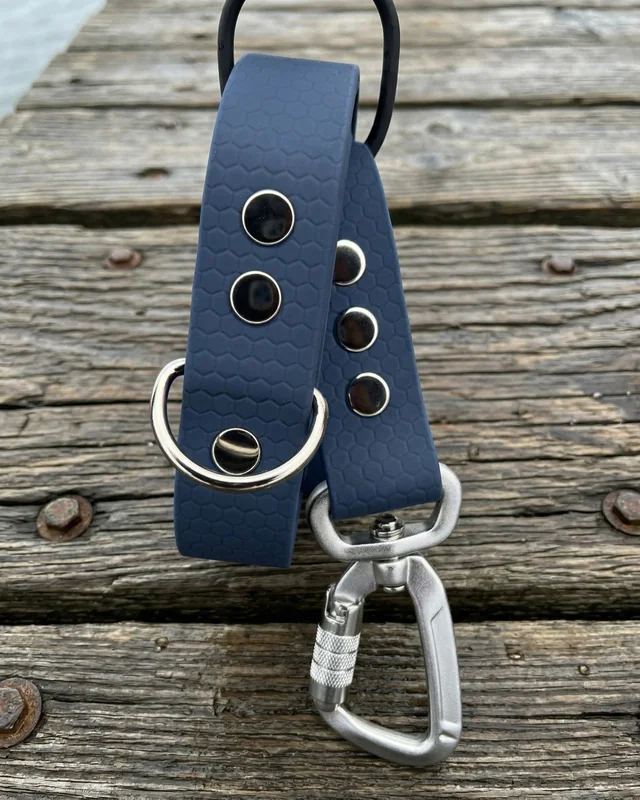
The best material for Norwegian conditions is waterproof webbing — a polymer-coated material that is 100% waterproof, withstands frost, is easy to wipe clean and does not smell even after hundreds of kilometres of sweat and rain. This is the material we use in ÅlesHund products.
Width and ergonomics
A narrow belt — under 4 centimetres — digs into your hips under load. Look for a width of at least 5–6 centimetres, preferably with light padding or an anatomical shape against your body.
Snap hooks and attachment points
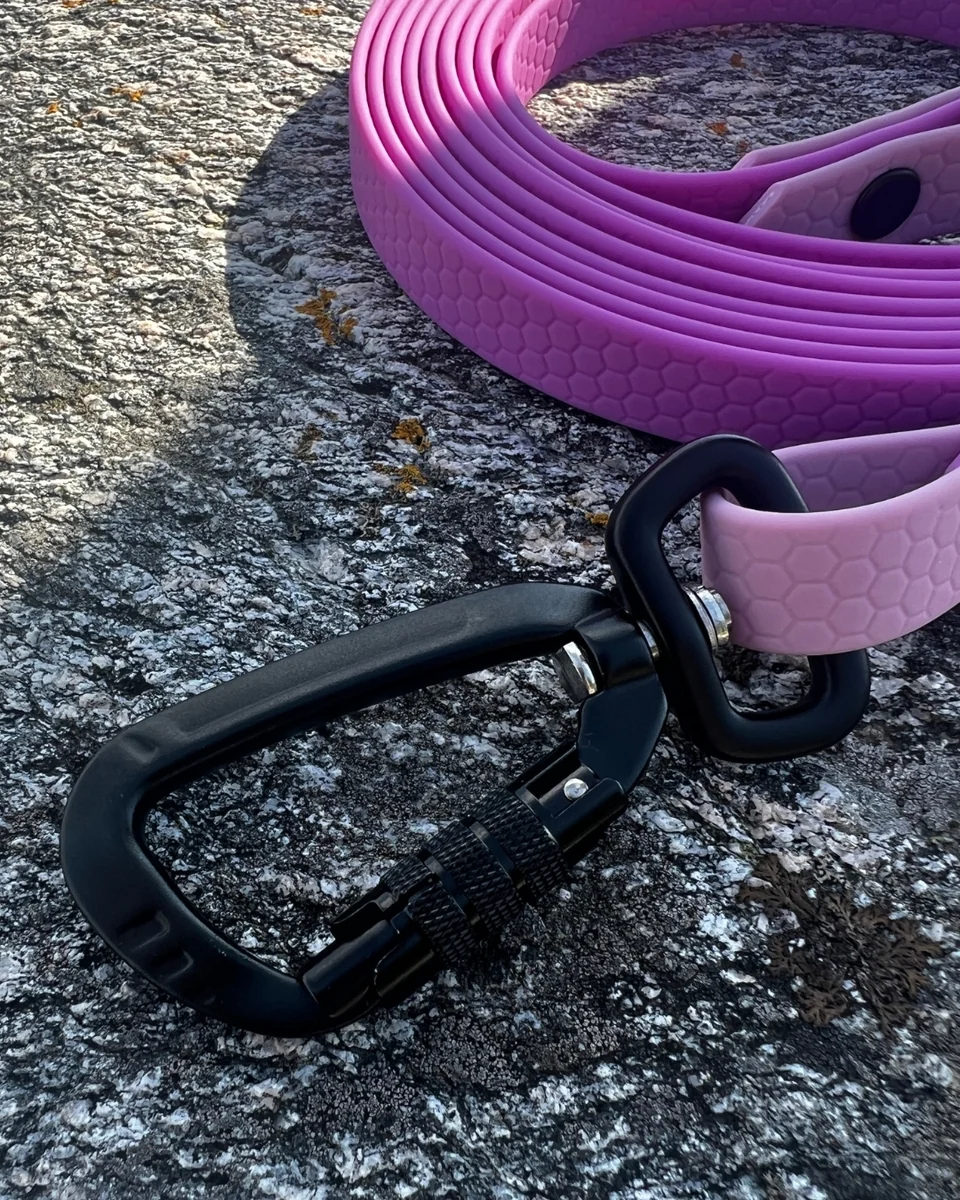
This is the detail most people underestimate. Look for locking snap hooks with a screw gate that cannot open accidentally, aluminium or steel snap hooks rather than plastic, and attachment points capable of withstanding a static load of at least 200 kg.
We use locking snap hooks of the same type used in climbing on all ÅlesHund products. Not because we expect your dog to weigh 200 kg, but because sudden pulling forces multiply at high speed.
Bungee section
An elastic section in the lead dramatically softens sudden pulls. The best position is closest to the belt, rather than closest to the collar. Bungee sections that stretch 30–40% are optimal — enough to cushion the force, but not so much that your dog loses all feedback from the lead.
Reflective details
Many people run early in the morning or late in the evening. Reflective elements on a belt are a safety feature, not decoration. Especially in Norway from October to March.
Our waterproof bestsellers — made for Norwegian weather
Measure your waist — not your hips, but the point where the belt will sit: just above the hip bones. Use an ordinary measuring tape and do not pull it too tight. Add 3–4 centimetres for adjustability.
Your dog's weight
Recommended lead strength
Under 10 kg
10–15 mm waterproof webbing
10–25 kg
16–20 mm
25–45 kg
20–25 mm
Over 45 kg
25 mm + bungee
Always attach the lead to a chest harness on your dog when running, never directly to the collar.
Training and familiarisation — how to get started
A running belt does not automatically turn your dog into a good running partner. It takes a little time.
Weeks 1–2: Walk with the belt on. Let your dog learn what happens when she pulls — the resistance comes from your body and balance rather than your arm. Most dogs adapt quickly.
Weeks 3–4: Short running intervals. Start with 5–10 minutes of gentle jogging, followed by walking. No more than three times a week. Your dog's joints need to build up gradually — just like yours.
From week 5: Increase by no more than 10% per week. Practise a stop signal — either verbal or with a whistle. Your dog should learn to stop promptly without pulling you forwards.
Important safety rules for running with a dog
Minimum age: 12 months. Puppies' bone growth is not complete until between 12 and 18 months, depending on breed. Running on hard surfaces before then can permanently damage the growth plates. For large breeds: wait until 18 months.
Temperature: Above 25°C — cut the run short. Dogs overheat dramatically faster than people. If the ground is too hot for your hand, it is too hot for their paw pads.
Never use a retractable lead for running. At speed, a retractable lead is an accident waiting to happen. It gives you no control and can become tangled around both of you.
Check paw pads after runs. Particularly in summer, because of tarmac, and winter, because of salt and ice.
Dog running belts: common questions
Can I use a running belt with any dog breed?
Most medium-sized to large breeds are well suited. Short-nosed breeds — Bulldogs, Pugs and French Bulldogs — should not run long distances. Short-legged breeds such as Dachshunds and Corgis should keep to a slow pace.
How far can we run?
An average family dog in good condition: 5–10 km comfortably. Start with 2–3 km and build up gradually.
Should my dog wear a harness or a collar while running?
Always a harness. A collar and sudden pulls combined with speed place unnecessary pressure on the neck vertebrae. A good Y-shaped or H-shaped harness is ideal.
Can a running belt handle Norwegian weather?
A waterproof belt: yes, without qualification. Nylon deteriorates over time.
What separates a good running belt from a poor one?
What happens if your dog sets off at full speed after a moose? With a cheap belt: the snap hook pops open, the stitching breaks or the belt slips down over your hips. With a good belt: you feel a jolt at your waist, slow down and your dog stops with you. That is what a running belt should do.
Quality lies in the details: the strength of the sewing thread, locking snap hooks, the thickness of the webbing and the width of the belt itself. These are all easy places to save money in production — and just as easy to spot out in the field.
Our recommended dog running belt
We make running belts in waterproof webbing — handmade in Ålesund, with climbing-standard locking snap hooks and waterproof material that withstands everything Norwegian nature brings. Available in five colours: hot pink, lavender, purple, teal and light pink — all with entirely black hardware.
See the running belt here →
Free delivery on orders over NOK 1099. 30-day returns.
Summary
Choose waterproof webbing over nylon for Norway's climate
Use a harness on your dog, never just a collar while running
Wait until your dog is 12–18 months old before running
Start gently and build up gradually — your dog is not an elite runner from day one
Buy quality once — locking snap hooks and a wide belt back are what keep you safe