A dog lead is something you use every single day. Yet it is surprising how many people are still walking around with the same nylon lead they bought at Europris five years ago. It works, technically. But after a few winters of rain, mud and melting snow here in Sunnmøre, you know it starts to smell. And the snap hook no longer clicks shut quite as well.
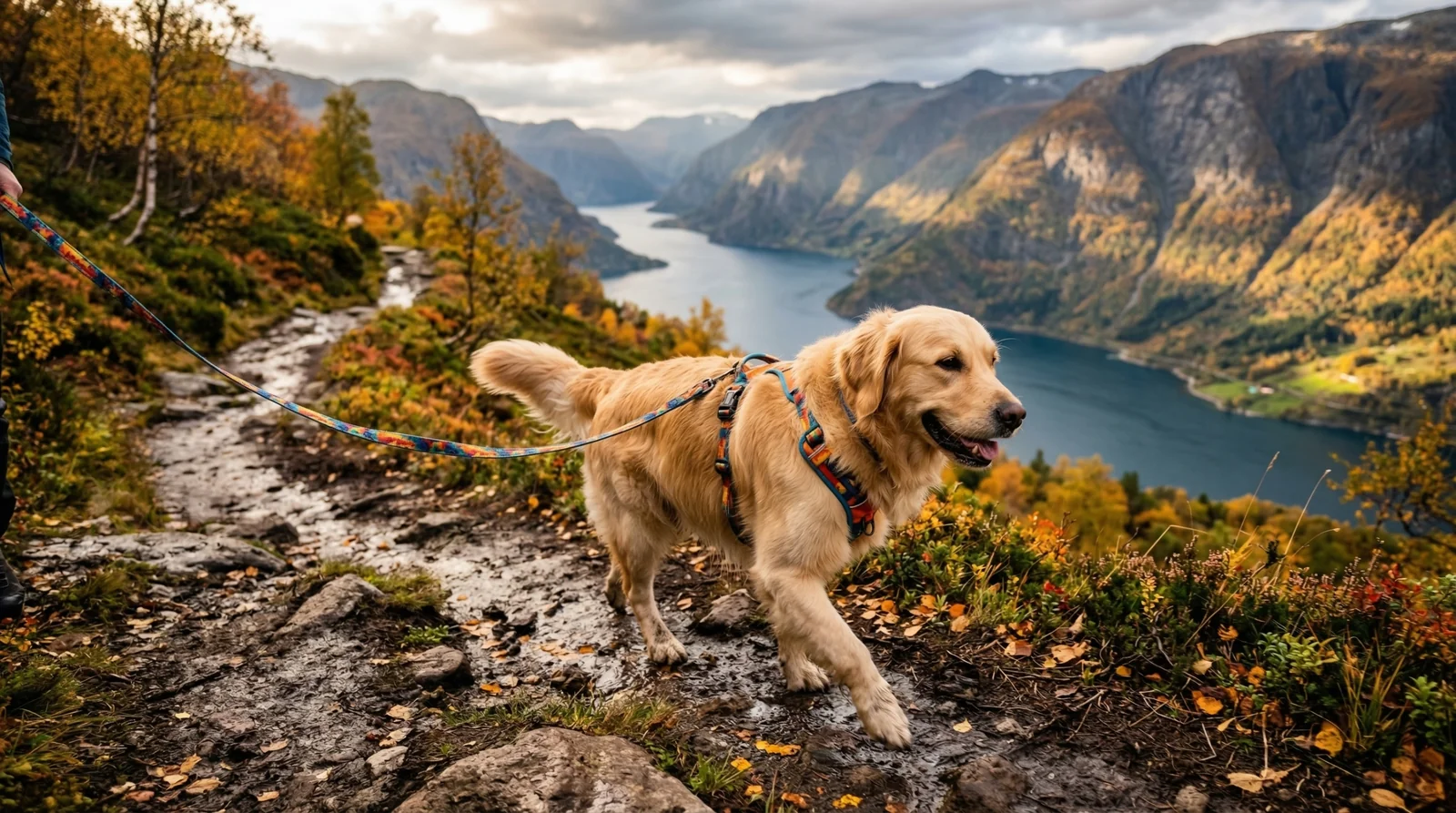
I have had dogs for more than fifteen years, and over that time I have tried most things. Leather that went stiff. Nylon that smelled unpleasant after two months in the rain of western Norway. Retractable leads that snapped when the dog decided to sprint after a hare. After plenty of trial and error, I have worked out what actually works in the Norwegian climate.
That is exactly what this guide is about: which dog leads stand up to everyday life in Norway, and what you should consider before buying.
What should you look for in a dog lead?
It is easy to feel overwhelmed by the choice. Materials, lengths, widths, snap hooks. Let me simplify things a little.
Material
This is the most important choice. A dog lead made from a poor material may look nice in the shop, but after 50 walks in the rain, it is a different story. More on materials below.
Snap hook and hardware
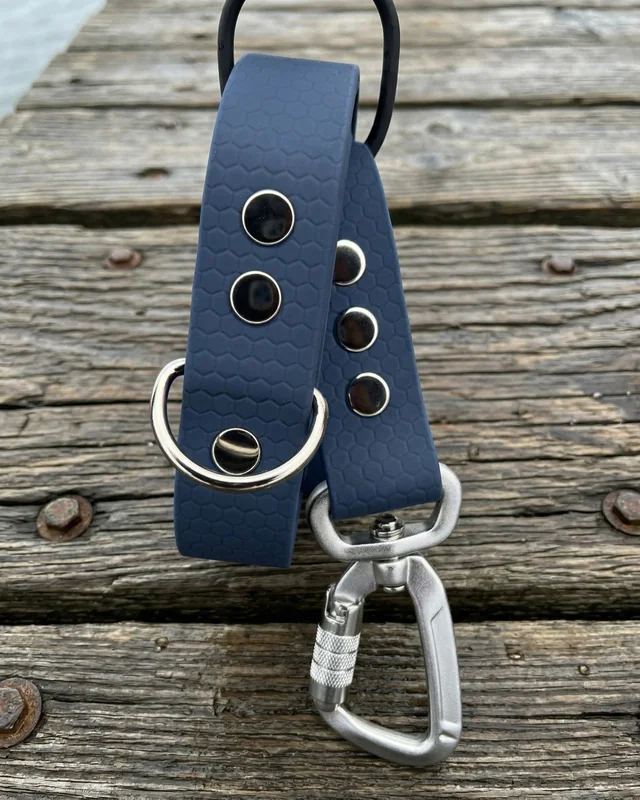
Cheap snap hooks made from zinc or a thin alloy wear quickly. After six months, they stop closing properly, and in the worst case they may open. Look for snap hooks made from stainless steel or brass. They cost a little more, but last for years.
Length
Standard dog leads are between 1.2 and 2 metres long. For urban walks, 1.5 m is perfectly adequate. For walking and training, you will often want 3-5 metres, or a long training line of 5-15 metres. More on choosing a length later in the article.
Handle comfort
Something people forget: you are holding the other end. A thin nylon lead can cut into your hand if your dog suddenly pulls. Padded handles or a soft material make a real difference on long walks.
Waterproof webbing vs nylon vs leather — an honest comparison
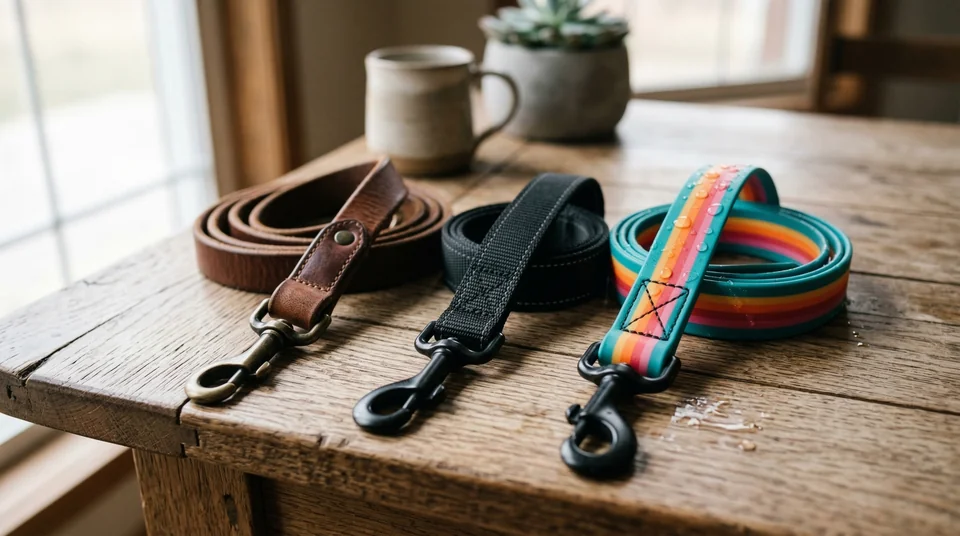
Here are the three most common materials, with their advantages and disadvantages. I will try to be fair.
Nylon
The cheapest option. You can find nylon leads from NOK 50 at Clas Ohlson. They are lightweight, come in every colour, and work reasonably well to begin with.
The problem? Nylon absorbs water. After a walk in the rain, the lead hangs heavily and dries slowly. Over time, it collects bacteria and starts to smell. Anyone who has used a nylon lead through an entire autumn in Bergen knows what I mean. You can wash it, but the smell comes back.
Durability is average. Nylon frays at the edges after a year or two of daily use, especially if your dog likes to chew.
Leather
Classic and attractive. Good leather, properly maintained, can last for 10+ years. It becomes softer and more attractive with time.
The drawback is maintenance. Leather and water are not the best of friends. After walks in rain and snow, you need to dry it and regularly apply leather conditioner. If you do not, it becomes stiff, cracked and eventually unusable. For someone walking their dog twice a day in Norwegian autumn weather, that means a lot of conditioning.
The price is higher too. A decent leather lead starts at around NOK 400, and a really good one often costs NOK 700-1000.
Waterproof webbing
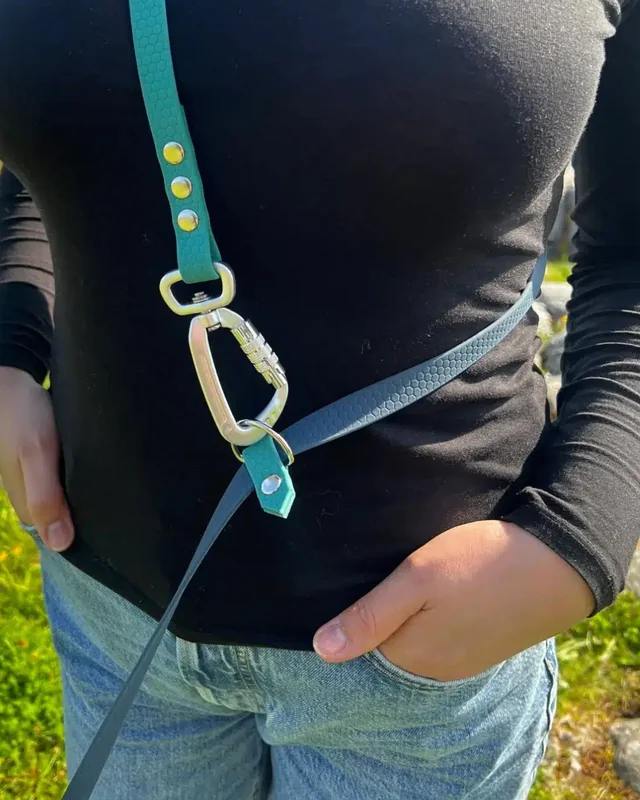
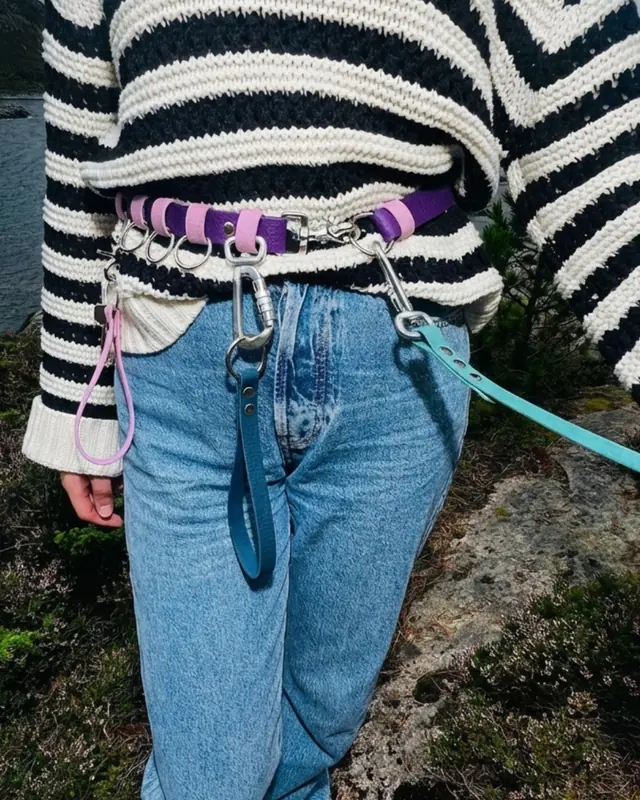
Waterproof webbing is a synthetic material with a polyester base and a TPU coating. It looks and feels a little like leather, but it is waterproof. Completely waterproof. You can drag it through a muddy puddle, rinse it under the tap, and it is clean again.
It does not smell. It does not absorb water. It withstands temperatures down to -30°C without becoming stiff. In Norwegian conditions, that is quite an advantage.
Is it perfect? No. Coated webbing is a little smoother than leather, so the grip may feel different at first. It is not as cheap as nylon either. A good-quality waterproof lead typically costs NOK 250-600, depending on length and width. But you avoid the maintenance, and its durability is very good.
A waterproof dog lead — worth it in the Norwegian climate?
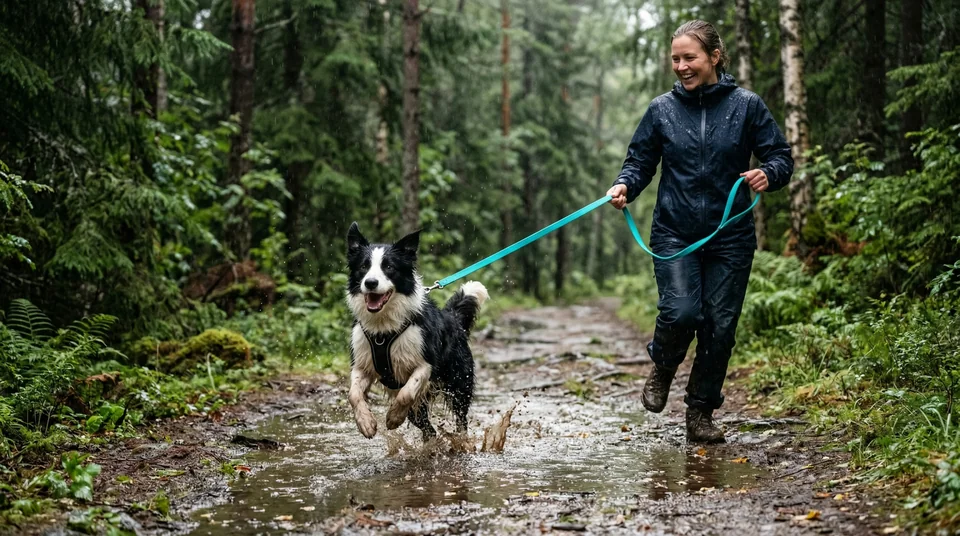
Let us be honest: we live in a country where many towns and cities have rain on around 200 days a year. In Bergen, the figure is closer to 240. Even in eastern Norway, slush, melting snow and mud are part of life for much of autumn and winter.
A waterproof dog lead is not a luxury here. It is practical.
We also have a separate guide to dog leads that withstand rain and mud, with specific care tips for the wettest months.
I switched from leather to waterproof webbing three years ago, and the everyday difference is noticeable. No drying after a walk. No Sunday leather-conditioning rituals. Has the dog rolled in something suspicious on the shore? Rinse the lead under the tap, and you are done. The whole process takes 15 seconds.
Waterproof leads are also a better choice for people with several dogs, where equipment is in constant use and does not have time to dry between walks.
Our waterproof bestsellers — made for Norwegian weather
Length and width depend on your dog's size, how you will use the lead, and a little personal preference.
Length
1-1.5 metres: Urban areas, heelwork and places with heavy traffic. Gives good control.
2 metres: An all-round length. Works for most walks. Gives your dog a little more freedom without losing control.
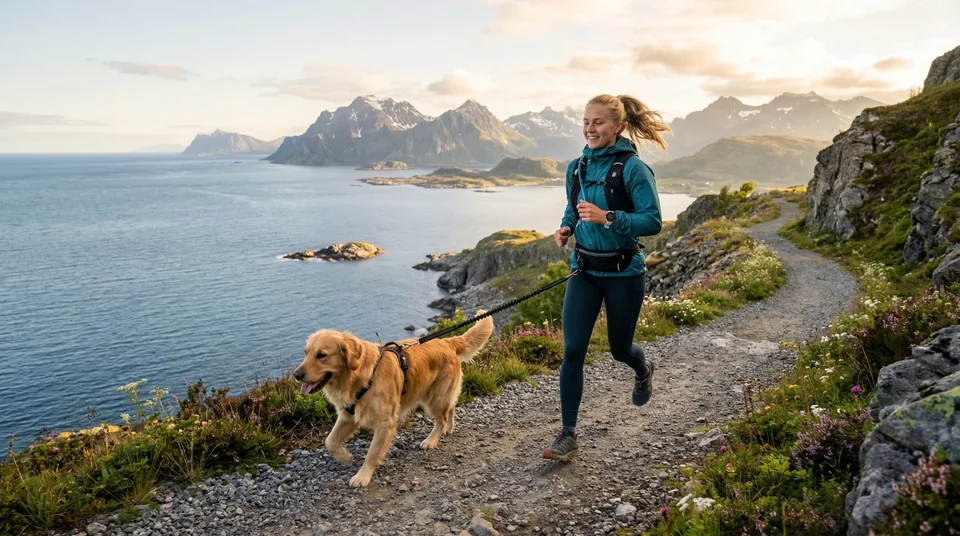
3-5 metres: Walking routes, parks and beaches. Your dog can sniff and explore without being completely off the lead.
5-15 metres (training line): Recall, tracking and recall training. Indispensable for puppy owners.
A tip: consider having two leads. A short one for town and a longer one for walks. It costs a little extra, but makes everyday life much easier.
Width
15 mm: Small dogs up to around 15 kg. Light and flexible.
20 mm: Medium-sized dogs, 15-30 kg. The most common width.
25 mm: Large dogs over 30 kg, or dogs that pull a lot. Provides more strength and a better grip.
For a 30 kg Labrador, I would choose 20 mm for everyday walks and 25 mm for a training line. For a small terrier, 15 mm is perfectly adequate.
Our recommendations
We have been making waterproof leads for a few years now, and here is what we would choose ourselves for daily use:
Waterproof Classic Dog Lead (NOK 329)
The right choice for most people. 1.5 metres long, waterproof webbing, stainless-steel snap hook. Simple, sturdy, no surprises. We have sold more than 200 of these, and the feedback has been consistently positive. Available in a range of colours, so you can find something to suit your style.
See the Waterproof Classic Dog Lead
Long Training Line (NOK 599)
5 metres long, waterproof, and surprisingly light for its length. Perfect for recall training or walks where your dog needs more freedom. The waterproof material means it does not absorb water and become heavy, a common problem with long nylon lines.
See the Long Training Line
Dog Lead Holder (NOK 119)
Not a dog lead in itself, but something I use every day. A small holder you attach to the wall by the door, so the lead is always ready to go. It sounds like a small thing, but it removes that daily irritation of “where did I put the lead?”
See the Dog Lead Holder
Summary
A good dog lead does not have to cost thousands of kroner, but it should stand up to your everyday life. For most people in Norway, that means a material that handles rain, snow and mud without needing lots of maintenance.
Waterproof webbing has become my preferred material after three years of daily use. It is not the cheapest, but it is the most practical for the Norwegian climate. Leather is still lovely if you enjoy the maintenance ritual. Nylon works in a pinch, but replace it after a season or two.
The most important thing is that the lead suits your dog, suits you, and stands up to the weather where you live. The rest is detail.