Guides
Dog leads that withstand rain and mud — what works in Norwegian weather (2026)
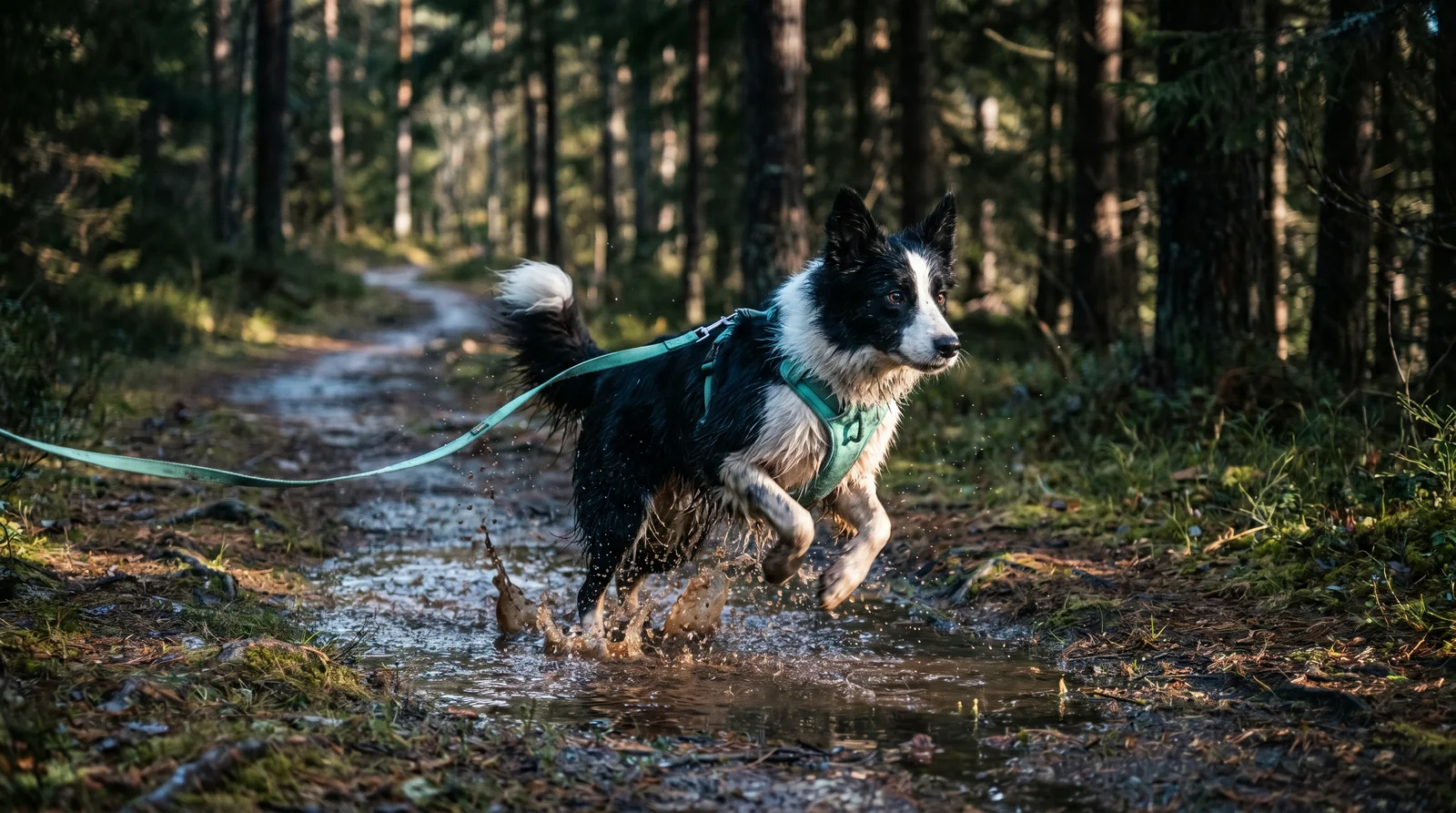
Norwegian weather has a particular talent for exposing cheap dog leads. Three months of autumn rain, a winter of road salt, a spring of melting slush — and suddenly you have a lead that smells of mould, a snap hook that will not lock, and a colour that has gone from bright pink to pale salmon.
This guide is about dog leads that withstand rain and mud. Not about materials at a technical level — we have a separate waterproof lead guide for that — but about what actually works in practice when you live in Norway and use your lead every single day, all year round.
We have been making handmade waterproof dog leads in Ålesund for several years, and every week we hear from dog owners who have gone through three or four leads before understanding what they are really looking for. Here is the short version.
“Waterproof” and “withstands rain” — not quite the same thing
Many people think these are synonyms. They are not.
Waterproof describes the material of the lead itself. Waterproof webbing does not absorb water, develop mould or become stiff after drying.
A dog lead that withstands rain and mud is something more. It is about the whole construction: the webbing, stitching, snap hook, D-ring, colour and surface. You can have the most waterproof material in the world, but if the snap hook is cheap steel with thin nickel plating, it will rust away before winter is over. Then it makes no difference how dry the lead itself is.
Think of it this way: waterproofing is one ingredient. A lead that withstands Norwegian weather is the whole recipe.
How ordinary dog leads fail in Norwegian weather
After seeing hundreds of returned and worn leads, we see the same problems recurring. See whether any of these sound familiar:
- Mould and unpleasant smells. Leather and cotton-woven leads absorb water and dry slowly. A hallway with underfloor heating provides the perfect climate for mould spores within ten days.
- Stiff and hard after drying. Leather leads that have become wet and then dried on a radiator turn dry and brittle, and crack along the stitching.
- Rust on the snap hook. The most common problem. After one Norwegian winter on salted roads, the snap hook looks as though it came from a shipwreck.
- The colour fades. Polyester leads without proper colour in the fibre fade from bright to pastel after one summer in the sun.
- The D-ring twists. Thin, low-quality steel rings become oval when large dogs pull — and then the snap hook comes free.
All these problems can be solved. It is simply a matter of knowing what to look for.
Materials that actually withstand rain and mud
There are four main types of material on the dog lead market today. Here is how they perform in Norwegian weather:
Waterproof webbing (the material we use): a polyester or nylon core with a waterproof coating. It does not absorb water, withstands seawater and can be rinsed under the tap. It keeps its colour for years. The only drawback: it may feel a little “technical” against the skin for the first few days.
Traditional leather. Attractive to look at, but a disaster in rain. Leather needs conditioning several times a season, must dry slowly at room temperature and should never be washed with soap. For a dog that swims in every stream and rolls in mud, leather is the wrong tool.
Ordinary uncoated nylon. The material itself tolerates water, but absorbs water and odours and becomes stiff after drying. This is what you often find in inexpensive pet-shop leads.
Paracord and braided rope. Strong and attractive, but the braid holds water and dirt for a very long time. It takes ages to dry properly and often becomes mouldy inside.
For Norwegian conditions, the conclusion is simple: waterproof webbing wins. Leather suits dry climates, and the rest are compromises.
Hardware and snap hooks — the weak link
A dog lead is never stronger than its weakest fitting. And 90 per cent of the problems we see are not in the lead — they are in the snap hook and D-ring.
What to look for:
- Solid brass or stainless steel. Not cheap zinc or steel with thin nickel plating. These rust from the inside out, and you do not notice until the lock suddenly stops working one November evening.
- A screw lock or double mechanism. An ordinary spring snap hook can open by itself if your dog twists the lead around a tree trunk. A screw lock or locking mechanism that you have to press deliberately is secure.
- Matt surfaces. Shiny chrome-plated snap hooks look nice in the shop, but the polished finish is the first thing to go. Matt black or brushed brass versions look as good after three years as on day one.
- A D-ring in the same material as the snap hook. Many manufacturers save money here. If the D-ring is a different metal from the snap hook, electrochemical corrosion occurs in salty conditions.
We use locking snap hooks in brushed brass or powder-coated steel — never the cheapest option, but the one that actually lasts.
Dog leads for mountain hikes and woodland walks
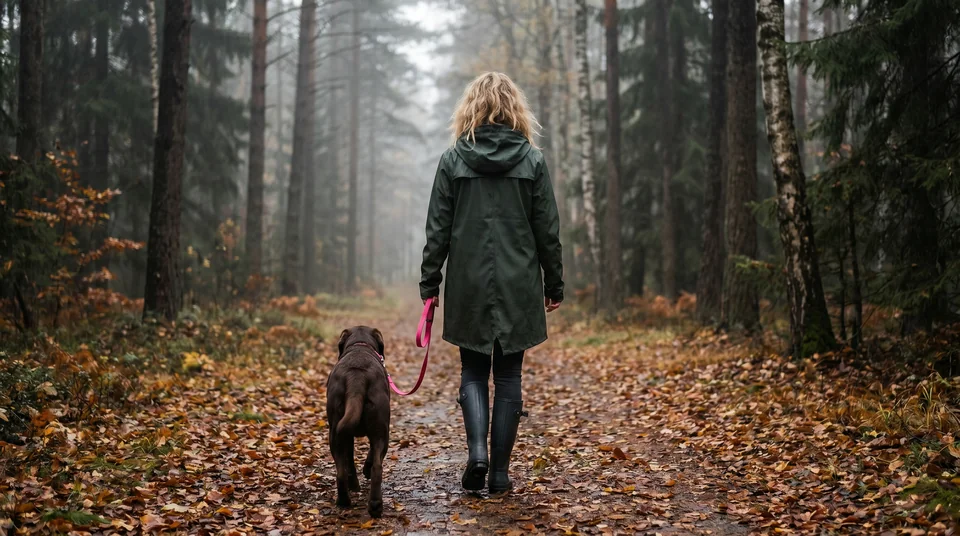
If you are heading out for a day in the mountains or a restorative woodland walk in the rain, there are a few extra things to consider.
Length: 2 metres is usually enough in dense woodland, but on an open mountain walk you will often want 3 metres or an adjustable version. Your dog can then sniff around without constantly pulling you. More on this in our length guide.
Weight: A lightweight waterproof-webbing lead weighs around 100–150 grams for a standard 2-metre model. Heavy leather leads can weigh twice as much, and you notice the difference in your backpack after a day in the mountains.
Reflective details: Norwegian walks turn dark quickly in October. A lead with sewn-in reflective material makes your dog visible from a distance, both to you and to others on the path.
A snap hook you can operate in gloves: A large snap hook that you can open while wearing thick winter mittens is a necessity in January, not a luxury.
Our waterproof bestsellers — made for Norwegian weather

Dog leads
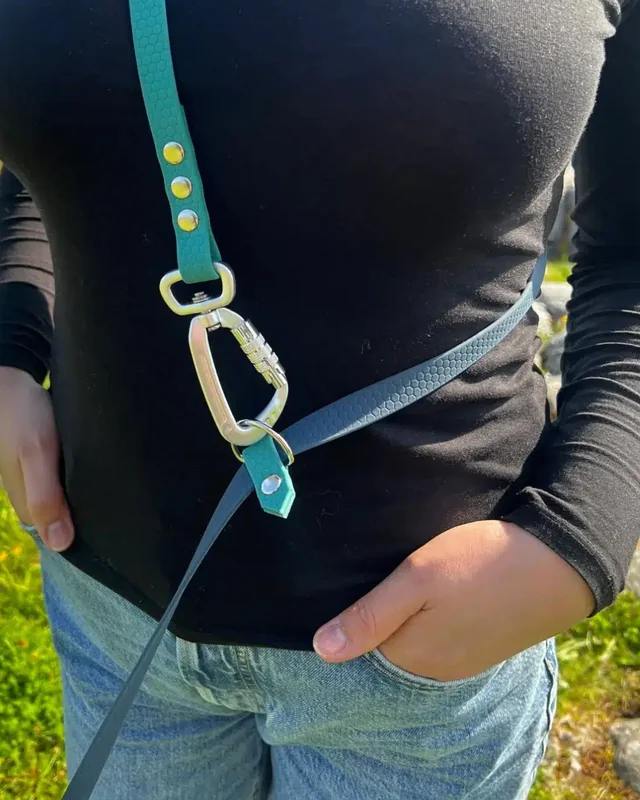
Hands-Free Dog Lead
from NOK 399.00
Hands-free dog lead in waterproof material, worn around the waist or over the shoulder. Available in 10 mm, 16 mm and 25 mm widths. Ideal as a running belt for jogging, hiking…
View product and customise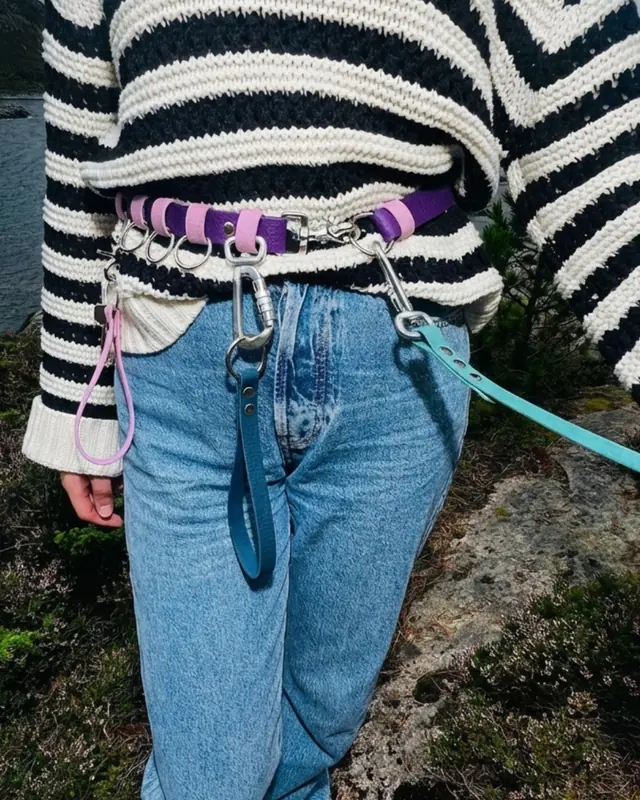

Belts
Adjustable Multifunctional Belt
from NOK 449.00
Adjustable dog walking belt in 16 mm or 25 mm waterproof webbing, designed for hands-free walks and dog sports. Fits sizes S to XL. Attach the lead to the belt and keep…
View product and customise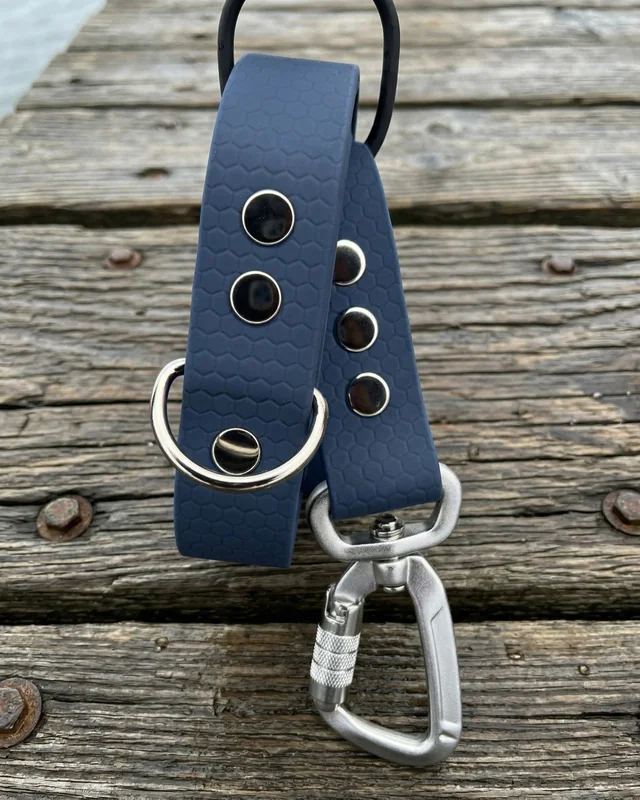

Dog leads
Classic Dog Lead
from NOK 329.00
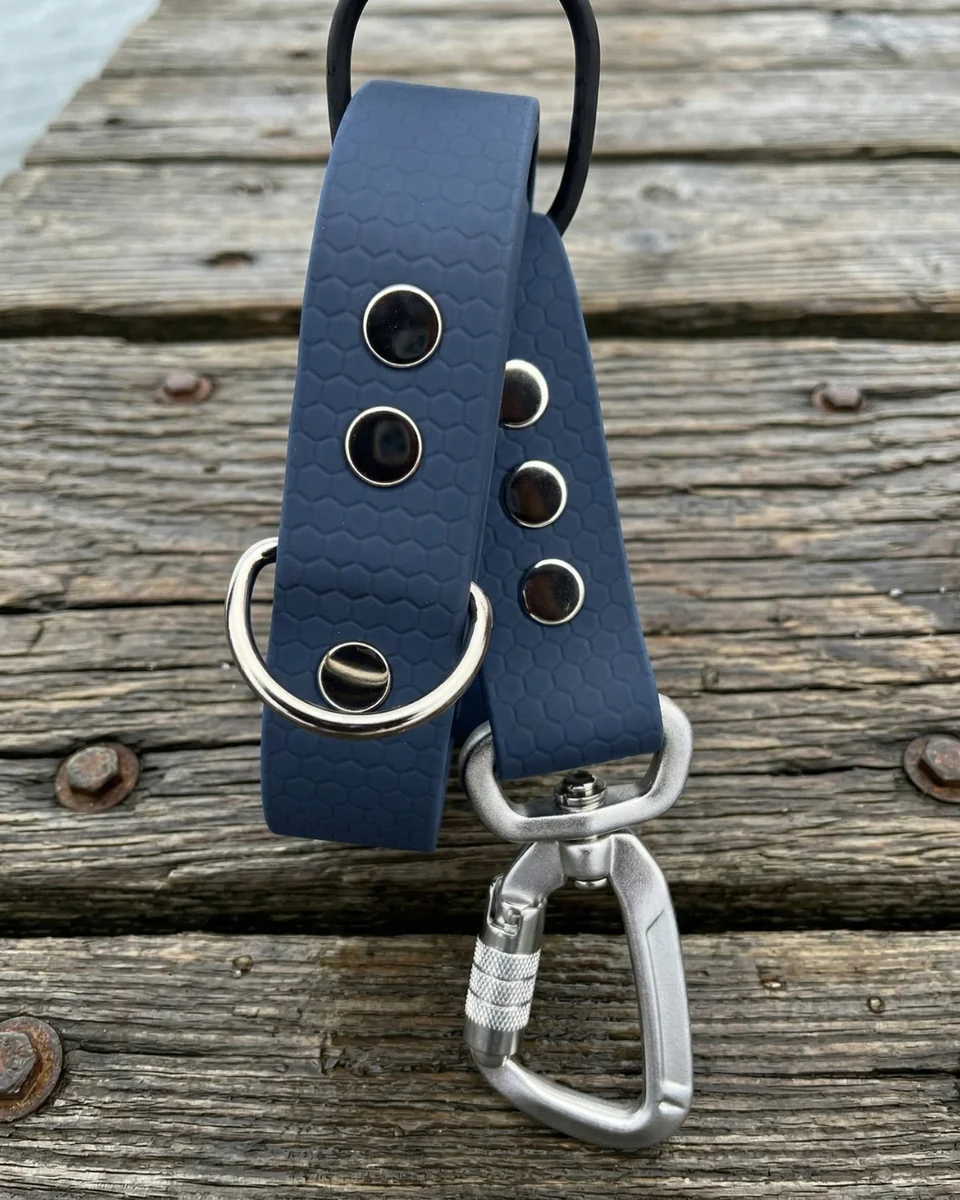
Handmade dog lead in waterproof material with a honeycomb pattern for grip. Choose between three widths and lengths from 1.2 to 5 metres. Handles all kinds of weather, mud and…
View product and customiseDog leads in muddy weather — autumn and spring in town
It is not only the mountains that put a lead to the test. Norwegian towns in November are a test of their own. Melted snow, salt spread on slippery surfaces, oil residue from cars, dog urine on the pavement — it all ends up on your lead five times a day.
In town, the colour choice is particularly tested. We recommend darker or muted colours if you often walk in the centre: lavender, deep purple or army green conceal everyday wear better than light pink or white. If you love bright colours — we do too — you need a waterproof coating; otherwise, your lead looks worn out after one winter.
A small tip from experience: rinse the lead under cold water for two minutes when you get home from a muddy walk in town. It takes five extra seconds and keeps the lead looking good for twice as long.
Winter specifics: salt, slush and frost
A Norwegian winter is the toughest season for dog equipment. Here is what we have learnt:
Salt is a snap hook's greatest enemy. Road salt and gritting salt corrode metal faster than ordinary seawater. An untreated steel snap hook may start rusting after two or three weeks of daily contact with salt. Rinse the snap hook in lukewarm water at least once a week in winter.
Frost makes stiff leads brittle. Waterproof-webbing leads stay soft down to around -25°C. Ordinary nylon, and especially paracord, become stiff and may crack with repeated freezing and thawing.
Matt black hardware loses heat more slowly. It sounds fussy, but a shiny chrome-plated snap hook can feel icy against a bare hand. A matt black or brushed snap hook feels noticeably warmer — because reflective surfaces radiate heat more quickly.
Keep the lead short on slippery ground. A 5-metre lead that pulls you over when your dog suddenly runs off can end in a broken wrist. Switch to 1.5–2 metres when it is slippery.
How to wash a dog lead after a muddy walk
A good waterproof dog lead should be easy to wash frequently. Here is the process we recommend:
- Rinse off the worst under the tap. Lukewarm water, not hot. Do it as soon as you get home — before the mud dries on.
- Mild soapy water if needed. A little washing-up liquid in a bowl of lukewarm water is enough. Use a soft brush or dishcloth. No abrasive cleaner and no bleach.
- Rinse thoroughly. Soap left in the webbing can irritate the skin on your dog's neck over time.
- Hang to dry at room temperature. Never on a radiator. Never in a tumble dryer. Never with a heat gun. The lead dries by itself in 4–6 hours.
- Apply a drop of sewing-machine oil to the snap hook once a month. This keeps the locking mechanism moving smoothly and prevents rust inside.
Follow this routine and a good waterproof lead lasts 5–8 years with daily use — even with a dog that loves swimming and rolling in mud.
Our recommendations for rain and mud
We have designed our entire product range around exactly this: Norwegian weather, everyday use and dogs doing what dogs actually do. Here is what we recommend:
- Waterproof dog lead: handmade in Ålesund, waterproof webbing and a brushed brass locking snap hook. Available in several lengths from 1.2 to 5 metres.
- Waterproof collar: the same material, adjustable, with a sturdy D-ring. Also available as a half-check model for large dogs.
- Waterproof hands-free lead: for anyone who wants to walk hands-free or jog with their dog. Withstands rain and slush just as well as an ordinary lead.
Everything we make is designed to last. Not because we like people buying infrequently, but because it is the right thing — both for dog owners and for the environment.
Frequently asked questions
Do waterproof dog leads withstand seawater?
Yes. Waterproof webbing is unaffected by seawater. The most important thing is to rinse the lead in fresh water afterwards; otherwise, salt crystals build up in the snap hook and cause corrosion over time.
Can I use a waterproof dog lead for a puppy?
Absolutely — it is often the best choice for a puppy because it is light, soft and easy to clean. For more information, see our guide to puppy equipment.
How often do I need to wash the lead?
A quick rinse after every muddy walk and a thorough wash with mild soapy water once a month are enough for most people. If your dog swims in seawater often, we recommend rinsing after every walk.
Do waterproof leads hold up in extreme cold?
Yes. Our waterproof webbing is flexible down to around -25°C. In even colder weather — winters in Finnmark — the webbing may become a little stiffer, but not brittle or unsafe.
What is the difference between handmade and mass-produced?
Handmade leads are checked manually at every stage — stitching, hardware and lengths. This means weak points are caught before the product is sent out. Mass-produced equipment can be good, but it is a matter of statistics: a small percentage have weak stitching or a poorly attached snap hook. Everything we make passes through human hands before leaving the workshop.
Summary
A dog lead that withstands rain and mud is about more than the material alone. It combines waterproof webbing, quality hardware, the right construction — and a little simple maintenance. Choose correctly once, and you avoid buying a new lead every season.
Need help choosing a lead, collar or hands-free lead to suit your dog and your walks? Get in touch — we always reply promptly and also make custom adjustments to order.