Guides
Dog-lead length: 3, 5, 7 or 10 metres? How to choose
Dog leads: 3, 5, 7 or 10 metres? Which length do you need?
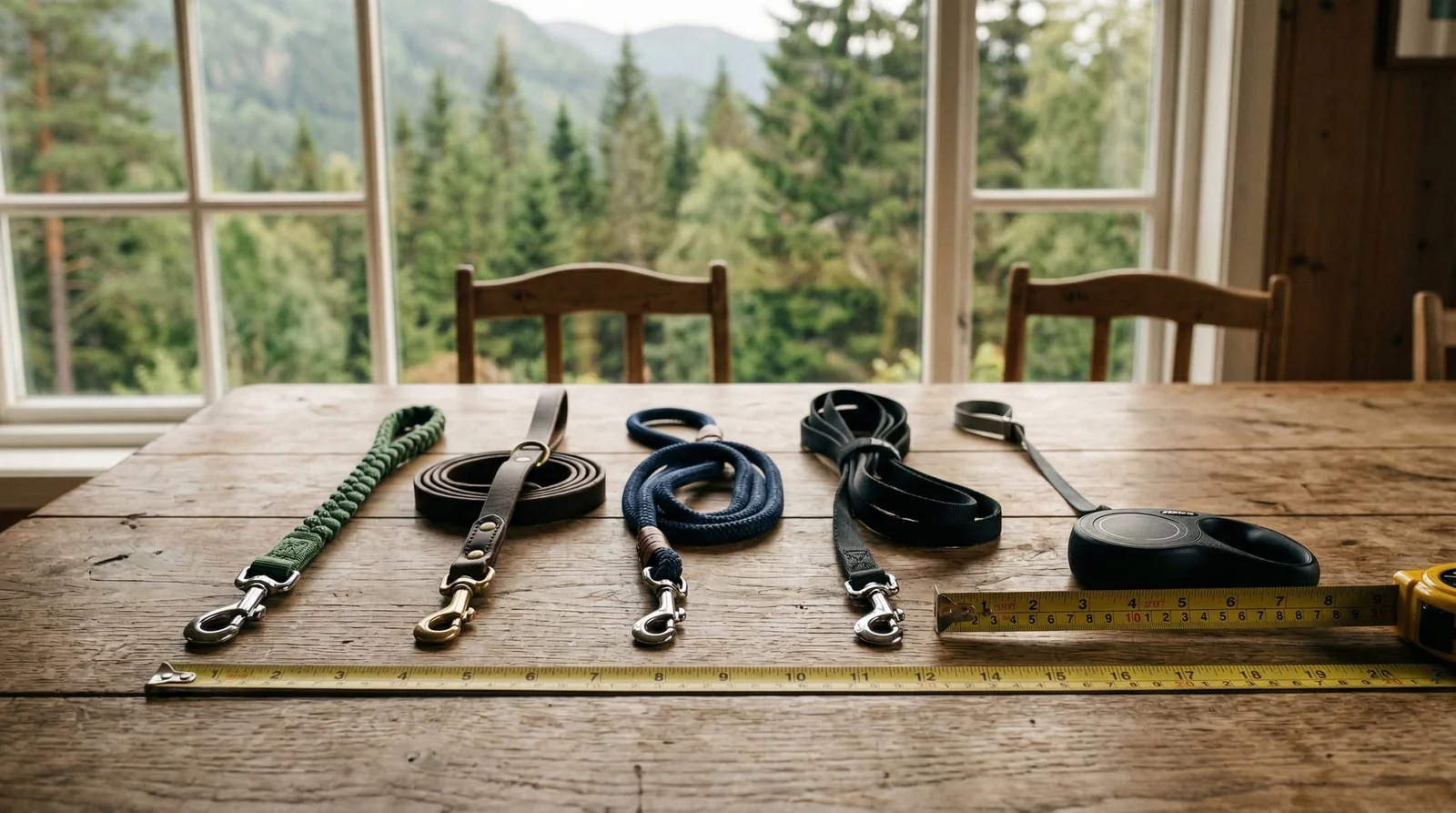
You are standing in a shop or scrolling through online shops. Dog leads come in every imaginable length: 3 metres, 5 metres, 7 metres, 10 metres. Perhaps longer. And you wonder: what actually is the difference? Does my dog really need a 7-metre lead, or will 3 do?
The answer is not as simple as “buy the longest”. The right dog-lead length depends on what you use it for, where you live, and what sort of dog you have. A Border Collie in a field needs something quite different from a Pug in central Oslo.
In this guide, we look at the most common lengths, who they suit, and how to find the right dog-lead size for your particular situation.
Contents:
- 3-metre dog lead: the everyday standard
- 5-metre dog lead: a little extra freedom
- 7-metre dog lead: a training favourite
- 10-metre dog lead: recall line and fieldwork
- Table: recommended length by breed and use
- How to choose the right dog lead
- Materials and quality
- Frequently asked questions (FAQ)
10-metre dog lead: recall line and fieldwork
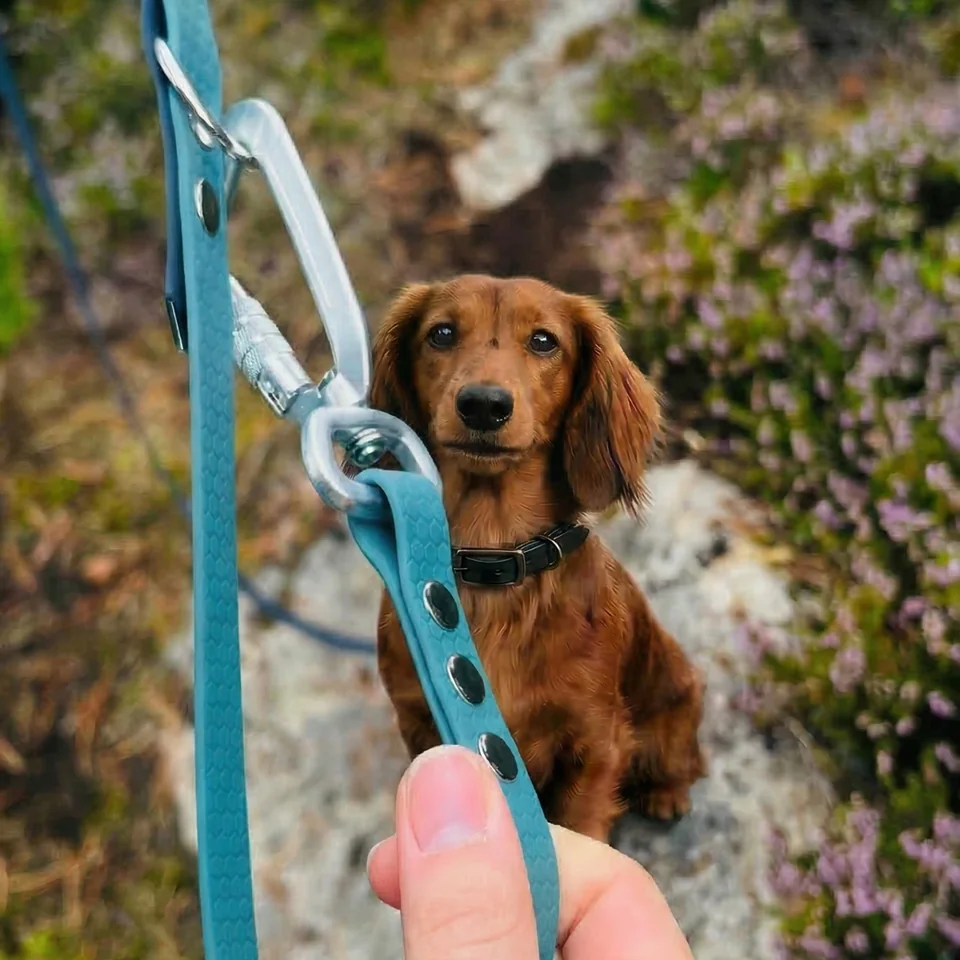
A 10-metre dog lead is the longest most people will ever need in daily use. It is not really an ordinary dog lead. It is a training line.
Who is 10 metres suitable for?
- Serious recall training. 10 metres gives your dog so much freedom that it almost forgets the lead is there. That is the point. You practise recall in conditions resembling off-lead freedom, but with a safety net.
- Hunting and tracking dogs. Breeds such as German Pointers, Weimaraners and Setters need long lines for training pointing work with game birds.
- Dogs that cannot be let off the lead. Some dogs have such a strong hunting instinct that they should never run free. A 10-metre long line still gives them a sense of freedom.
The challenges of 10 metres
Let us be honest: 10 metres is a lot of lead. It tangles, catches on bushes, and takes practice to handle. If you are not used to it, the first few outings can bring more stress than pleasure.
Weight is another factor. A 10-metre line in ordinary nylon can easily weigh 300-400 grams, and you notice it. Especially when combined with rain.
Our long training line in waterproof webbing solves both problems. It is light, smooth, and does not absorb water. You can drag it through mud, wash it off, and it weighs the same afterwards. That makes 10 metres genuinely manageable in practice, rather than just in theory.
Table: recommended dog-lead length by breed and use
| Breed / dog type | Urban walks | Park / open space | Woodland / mountains | Training |
|---|---|---|---|---|
| Small breeds (Chihuahua, Pug, Pomeranian) | 3 m | 3–5 m | 5 m | 5 m |
| Medium breeds (Beagle, Cocker Spaniel, Sheltie) | 3 m | 5 m | 5–7 m | 7 m |
| Large breeds (Labrador, Golden Retriever, German Shepherd) | 3 m | 5 m | 7 m | 7–10 m |
| Very large breeds (Great Dane, Newfoundland) | 3 m | 5 m | 5–7 m | 7 m |
| Hunting dogs (Setter, German Pointer, Weimaraner) | 3 m | 5–7 m | 7–10 m | 10 m |
| Puppies (all breeds) | 3 m | 5 m | 5 m | 5–7 m |
| Dogs with a strong hunting instinct | 3 m | 5 m | 7–10 m | 10 m |
The table is a starting point, not a definitive answer. Some Labradors are as laid-back as sofa cushions. Some Chihuahuas have the energy of a Malinois. Know your own dog.
How to choose the right dog lead: a practical checklist
There is no single perfect dog lead for every situation. Most dog owners have 2-3 different leads and switch as needed. That is completely normal.
1. Where do you live?
If you live in a city centre, a 3-metre dog lead is a sensible choice for daily use. If you live in the countryside with access to woodland and open land, you will probably need something longer as well.
2. What sort of dog do you have?
A lead for a large dog should generally be longer than one for a small dog. Not because large dogs “deserve” more room, but because they physically need it. A large dog at full speed on a short lead creates forces that are uncomfortable for both parties. Dog and owner alike.
3. What are you training?
If you are training recall, you need at least 7 metres. Preferably 10. Without enough length, the training becomes pointless, because the dog is never far enough away to make a real choice.
4. Material matters more than you think
Most dog leads are made from nylon or polyester. They work reasonably well in dry weather. But in Norway, it is rarely dry.
Nylon absorbs water. It becomes heavy and stiff, and eventually starts to smell. Leather leads look lovely, but need maintenance and do not cope particularly well with rain.
Waterproof material is an alternative that solves most of these problems. It is a synthetic material with a texture reminiscent of leather, but it is completely waterproof. It does not absorb smells, is easy to clean, and stays soft in every kind of weather.
At ÅlesHund, we use waterproof, durable material in all our dog leads. Everything is handmade in Ålesund. We chose waterproof synthetic material because we live in western Norway, and it rains here. A lot. A dog lead that cannot withstand water is fairly useless on 200 days of the year. More on that in our guide to dog leads that withstand rain and mud.
5. Flexibility: one lead or a system?
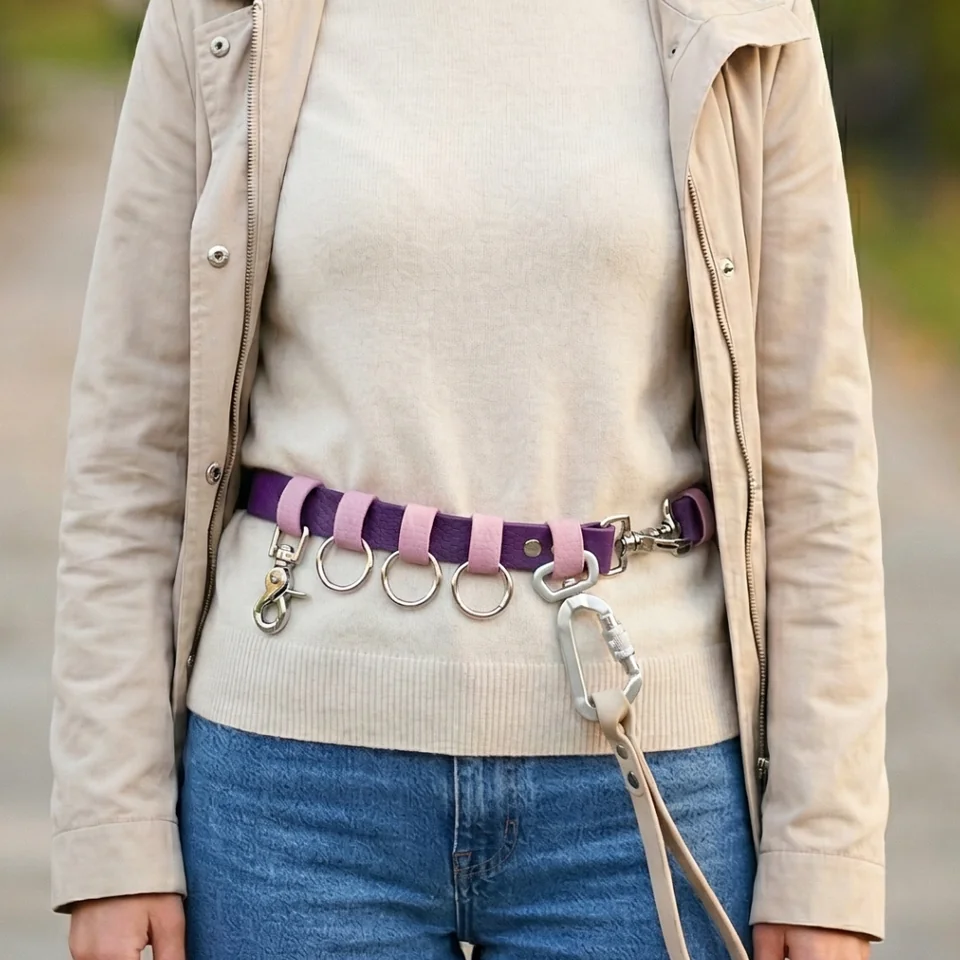
Some dog leads can be adjusted in length. It sounds like a small thing, but it is very practical. You can shorten the lead on the pavement and let it out in the park without changing leads.
Our adjustable multifunctional belt was made with exactly this in mind. It can be used as an ordinary dog lead, attached to a hands-free belt, or adjusted in length as needed. All in durable, waterproof material, naturally.
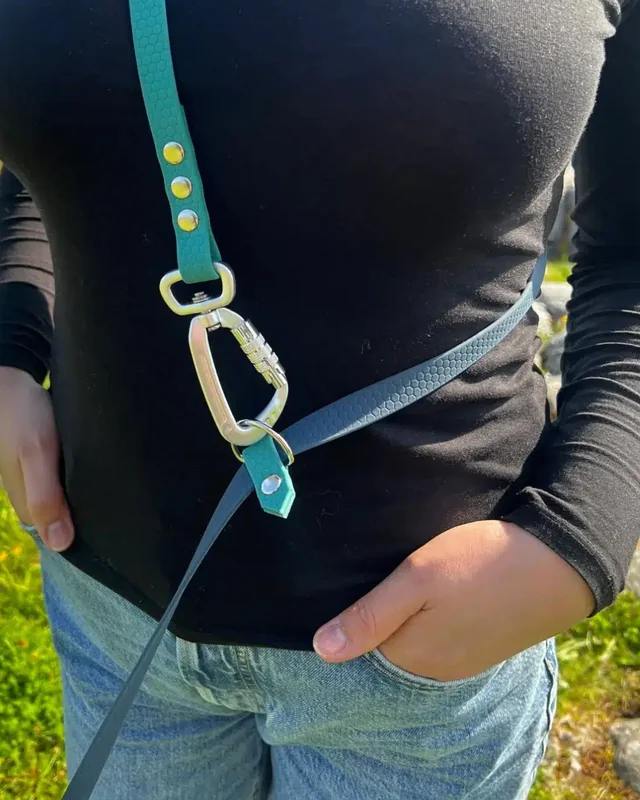
For those who prefer their hands free (on runs, with a pram, or simply because it feels good), we also have a waterproof hands-free lead. It fastens around your waist and gives you complete freedom of movement while your dog walks safely beside you.
Materials and quality: what you should know
Let us talk about materials, because they affect the experience more than length does.
Nylon
The most common material. Cheap, available everywhere, and comes in every colour. The downside: it absorbs water, can cause friction burns on your hands if your dog jerks, and wears relatively quickly.
Rope / cord
Popular for round leads. Provides a good grip, but becomes extremely heavy in wet weather. Difficult to dry properly. Can develop mould inside over time.
Leather
Looks good. Feels premium. But real leather needs maintenance: oiling, drying and protection from water. Most dog owners do not keep that up in the long run.
Waterproof, odour-free material
A coated synthetic material combining the best of leather and plastic. Waterproof, odour-free, durable and easy to clean. Feels soft in your hand. Withstands UV, salt, mud, and everything else Norwegian nature can throw at it.
Good-quality coated webbing has a lifespan of more than 15 years under normal use, and retains its strength throughout. That is a noticeable difference from nylon, which typically loses strength after 2-3 years of regular use.
That is why all ÅlesHund products use waterproof material. It costs more than nylon, but you buy it once.
Our waterproof bestsellers — made for Norwegian weather

Dog leads
Hands-Free Dog Lead
from NOK 399.00
Hands-free dog lead in waterproof material, worn around the waist or over the shoulder. Available in 10 mm, 16 mm and 25 mm widths. Ideal as a running belt for jogging, hiking…
View product and customise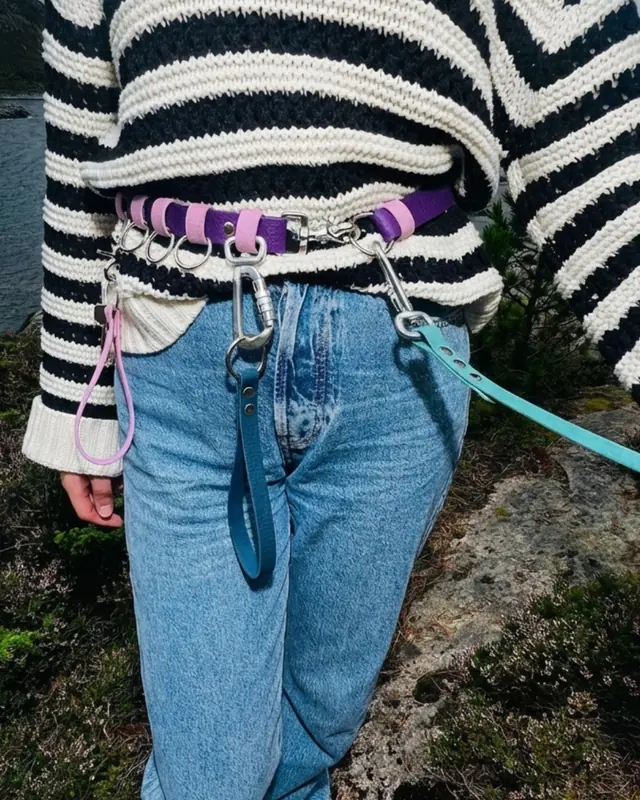

Belts
Adjustable Multifunctional Belt
from NOK 449.00
Adjustable dog walking belt in 16 mm or 25 mm waterproof webbing, designed for hands-free walks and dog sports. Fits sizes S to XL. Attach the lead to the belt and keep…
View product and customise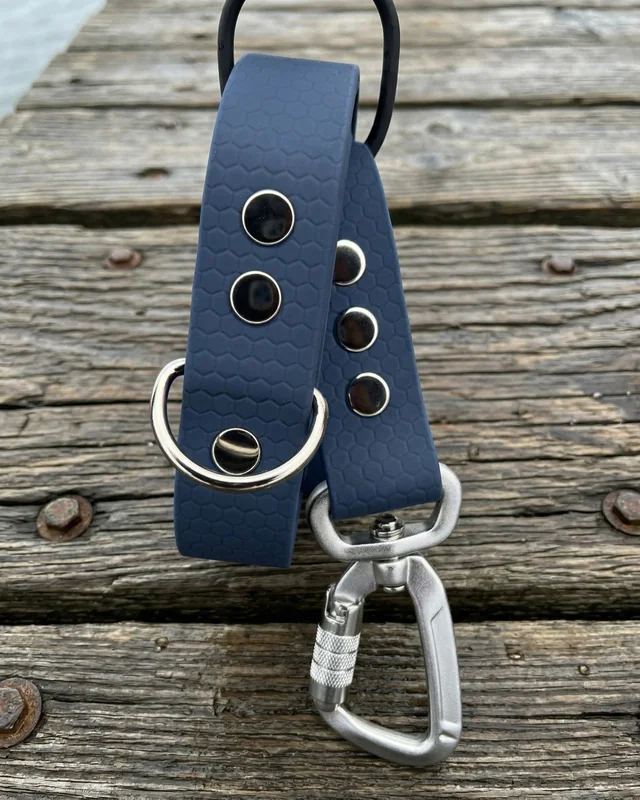

Dog leads
Classic Dog Lead
from NOK 329.00
Handmade dog lead in waterproof material with a honeycomb pattern for grip. Choose between three widths and lengths from 1.2 to 5 metres. Handles all kinds of weather, mud and…
View product and customiseDog leads with elastic: worth it?
A dog lead with elastic has a stretchy section, usually 20-40 cm, that absorbs sudden pulls. It softens the shocks for both dog and owner.
Advantages:
- A smoother experience for dogs that pull
- Reduces strain on your shoulders and arms, and your dog's neck
- Useful for dogs in rehabilitation or with neck injuries
Disadvantages:
- Gives the dog less clear feedback
- Can interfere with recall training
- The elastic wears over time and loses its stretch
For daily use, a dog lead with elastic can be a nice upgrade, especially if your dog pulls a little. But for training, particularly recall, most dog trainers recommend a fixed lead without elastic.
Frequently asked questions (FAQ)
How long a dog lead does a puppy need?
A puppy's lead should be 3-5 metres long. Start with 3 metres for the first walks, and move up to 5 metres once your puppy has learnt the basics of walking. Puppies need to explore, but they also need clear boundaries. An overly long lead can make it confusing for a puppy to understand where those boundaries lie.
Can I use a 10-metre lead in town?
Technically yes, but it is impractical and potentially dangerous. In built-up areas with traffic, cyclists and other dogs, you should stick to 3 metres. A long lead in town tangles and creates dangerous situations. Use the long lead in woodland, parks and open areas.
What is the difference between “hundebånd” and “hundekobbel”?
The Norwegian words “hundebånd” and “hundekobbel” mean the same thing: a line attached between you and your dog. “Kobbel” is a slightly more traditional Norwegian word, while “hundebånd” is more common in everyday speech. Some people use “kobbel” specifically for multi-dog leads, but in practice the words are interchangeable.
Which dog lead suits a large dog?
A lead for a large dog should be at least 5 metres for park walks and 7-10 metres for training. Width and strength matter just as much as length. For large breeds, a lead at least 20 mm wide with a stainless-steel snap hook is recommended. Durable, waterproof material in a 25 mm width easily handles large breeds such as Labradors, Golden Retrievers and German Shepherds.
Are retractable leads a good alternative?
Retractable leads (Flexi leads) have their advantages. They are practical and intuitive. But they also have clear drawbacks: the mechanism can fail, they give poor control in urgent situations, and the thin line can cause friction burns or cuts. Most dog trainers recommend a fixed lead over a retractable one. The price is about the same, but a good fixed lead in waterproof synthetic material lasts many times longer.
How often should I replace my dog lead?
That depends entirely on the material. A nylon lead should be replaced when it shows signs of wear: fraying, weak points or stiffness. This often happens after 1-3 years of daily use. A lead in durable, waterproof material can last 10-15 years. Check the snap hook regularly, whatever the material. It is usually the first part to fail.
Can I use the same dog lead for training and everyday use?
Yes, but it is not ideal. Ideally, you have a short lead (3 m) for daily use and a longer one (7-10 m) for training. Many dog owners find that two leads cover every situation. An adjustable lead, such as ÅlesHund's multifunctional belt, can do both if you prefer to have just one.
Summary
Choosing the right dog-lead length is not about finding “the best”. It is about matching the length to the situation.
- 3 metres for urban life and daily roadside walks
- 5 metres for parks, open spaces and puppies
- 7 metres for training and woodland walks with large breeds
- 10 metres for recall training and dogs that need a long line
Most dog owners manage well with two leads: a short one for everyday use and a long one for training and walks in nature.
And remember: the material matters at least as much as the length. A dog lead that becomes heavy and smelly after two weeks of Norwegian autumn weather makes nobody happy, neither you nor your dog. See ÅlesHund's full range in waterproof, odour-free material, handmade in Ålesund for Norwegian conditions.